
10 Fall Nail Color Combinations You Can Build from Your Polish Collection
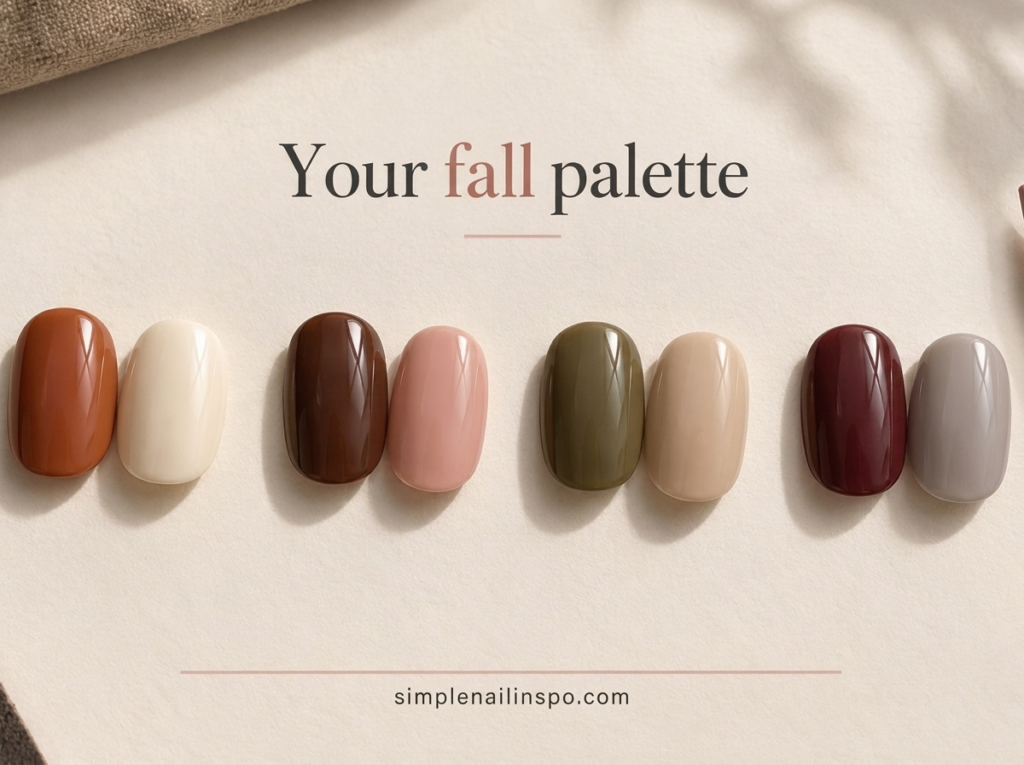
Fall nail colors do not have to mean buying an entirely new collection of brown polish. A shade you already own can feel autumnal when you change what sits beside it. Cream softens a deep red, olive makes pink feel less sugary, and a small amount of orange can warm up a familiar gray manicure.
These ten combinations are editorial styling ideas, not a ranking of this season’s most popular shades. Each includes a simple placement plan and a way to adjust the contrast. Use the colors as families rather than exact shopping instructions: your burgundy, rust or beige can be slightly different and still produce a coherent manicure.
Sort your bottles by depth first
Put a light, medium and dark polish together before deciding whether their names sound autumnal. The difference in depth often makes a combination readable. Two beautiful colors that are almost equally dark may look like one shade from a distance, which can be lovely if you want a quiet result but disappointing if you expected a clear pattern.
Then compare warmth. A yellowish cream feels different beside brown than a cool pale pink does. A blue-based gray can make rust look brighter; a warm gray can make it feel more blended. There is no universal rule that one undertone belongs to a particular skin tone. Hold the colors beside your hand and judge the combination you actually see.
Finally, check the finish. For your first attempt, use two polishes with similar coverage and shine. A sheer jelly beside a dense cream creates another layer of contrast, which may be intentional but can make a simple color comparison harder to judge.
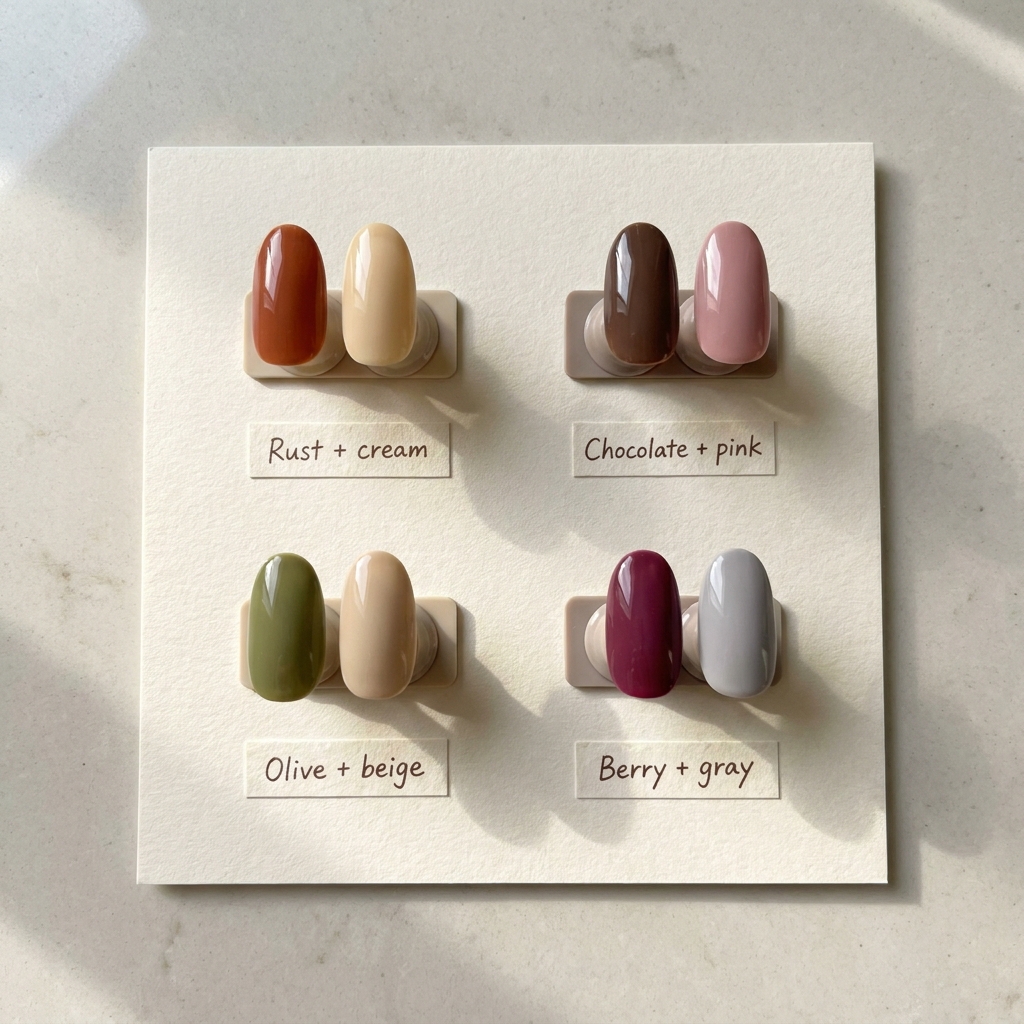
1. Rust and warm cream
Use rust on four nails and cream on the ring finger. The light accent keeps the warm color from feeling too heavy and creates room for a small seasonal detail if you want one later. Keep it plain first; the contrast already gives the manicure structure.
For a softer version, reverse the proportions and use rust on only the thumb and ring finger. The same two bottles will then read as a light neutral manicure with autumn accents. This is useful if you like orange but do not want it on every nail.
If your rust looks very red, pair it with a cream that is not strongly yellow. If it looks more orange, a warm cream can reinforce that warmth. Swatch both together before deciding. Bottle glass and indoor lighting can change your impression of a shade more than you expect.
2. Chocolate and dusty pink
Chocolate brown beside dusty pink gives a gentle contrast without becoming pale all over. Try brown on the thumb, index and little finger, with pink on the two middle nails. The pair of adjacent pink nails makes the arrangement look planned rather than like a single accidental accent.
Choose a pink with enough depth to remain visible beside the brown. A very sheer pink can also work, but it will look lighter and more transparent than a dusty cream formula. Decide whether you want that difference before painting.
A small brown dot on one pink nail can connect the colors, though it is optional. If you add it, leave the other pink nail plain. Repeating the brown in one tiny detail is enough; there is no need to outline every nail or add a second decorative color.
3. Olive and beige
Olive and beige create a muted set that works well when you want an autumn palette without red or orange. Use beige as the main color and olive on the two ring fingers. For a bolder version, make olive the main color and reserve beige for the accents.
Look at the olive in daylight. Some shades lean strongly yellow, while others are closer to gray-green. A yellowish olive can work with a warm beige; a gray-green may sit more comfortably beside a cooler taupe. Treat this as a visual comparison rather than a rigid matching rule.
Keep the nail shapes and finish consistent so the muted colors do not seem unrelated. A simple glossy set is enough. If you want a detail, use a short beige side stroke on one olive nail rather than introducing a third color that changes the mood.
4. Deep berry and soft gray
Berry and gray give fall nails a cooler direction. Paint the thumb and ring finger berry and the remaining nails gray. This places the darker shade at two points across the hand without making the whole set dark.
A medium gray creates a quieter pairing; a very pale gray makes the berry stand out more strongly. If your gray looks almost white, check its coverage before planning a full opaque manicure. You may prefer the softer result of a deliberately translucent shade rather than forcing it to cover completely.
This combination also makes a useful starting point for a small moon or dot detail. Keep the motif in one of the existing colors. Our subtle Halloween nail ideas show how a tiny accent can shift an autumn palette toward October without turning it into a full themed set.
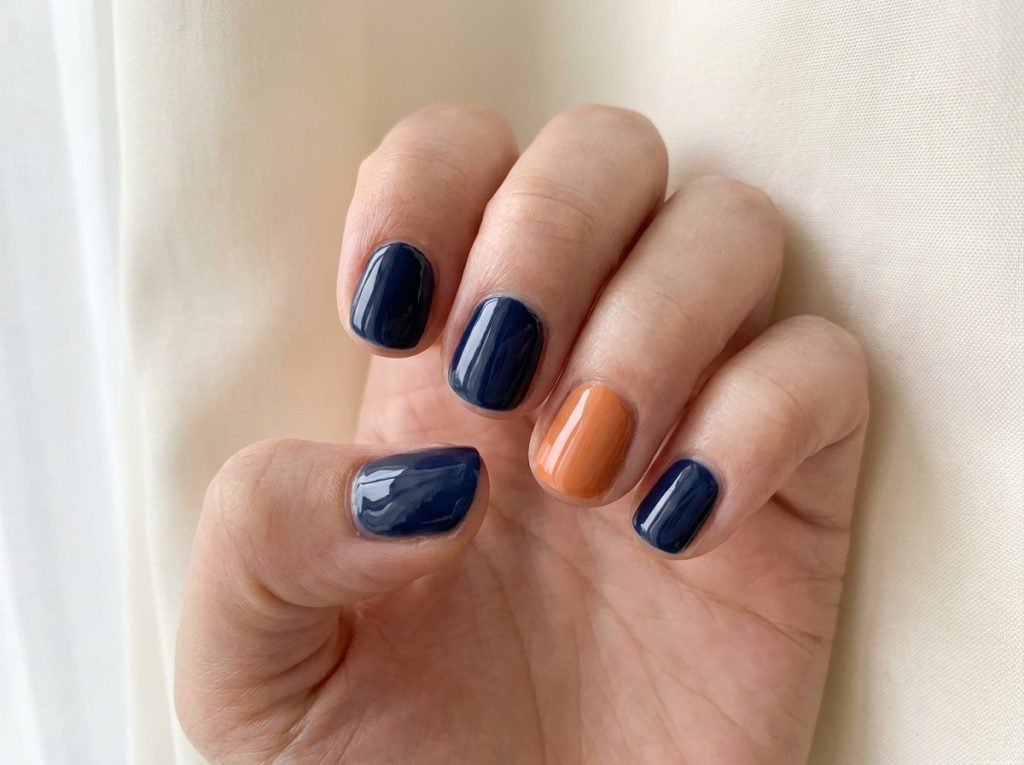
5. Navy and muted orange
Navy provides a less obvious alternative to black beside orange. Use navy on most nails and orange on one accent. The contrast feels strong but slightly softer than a classic Halloween black-and-orange manicure.
Choose an orange that suits the mood you want. A bright pumpkin shade feels playful; a muted terracotta feels more restrained. If the navy is almost black, the combination will look darker indoors than it does near a window. Check both settings before deciding whether the orange needs to be brighter.
For a simple graphic variation, paint a small navy corner over an orange accent. Reverse that order only if the orange polish covers the dark base well. A translucent orange may need a different application than an opaque cream, so test the layering on a spare tip instead of guessing on your finished nail.
6. Caramel and espresso
Two browns can create a tonal manicure with more depth than a single shade. Alternate caramel and espresso across the hand, or place the lighter caramel on the middle and ring fingers. The difference in depth is what makes the arrangement readable.
If both browns are very similar, use a larger block of the lighter shade rather than a tiny detail. A small caramel dot on espresso may disappear, while a whole caramel nail remains visible. You can also choose one shade with a slightly warmer undertone to make the contrast more apparent.
Keep this set simple if you are using it to compare colors. A glossy finish across all nails lets the tonal relationship do the work. Our chocolate and berry manicure guide includes additional ways to use deep brown when you want a richer, more dramatic arrangement.
7. Plum and pale lavender
Plum and lavender create an autumn palette without relying on earth tones. Use plum as the main color and pale lavender on one or two accents. The lighter shade makes the depth of the plum more noticeable and gives the set a softer edge.
Check whether your plum leans red or blue. A blue-leaning plum often looks harmonious beside a cooler lavender, while a redder plum can create a more noticeable contrast. Either can work. The important question is whether you like the two colors together on your hand, not whether they match a color-name rule.
For a small detail, place a plum dot on one lavender nail. Keep the second lavender nail plain if you are using two accents. This lets the design feel connected without making every finger compete for attention.
8. Forest green and cream
Deep green and cream make a clear two-color manicure that can move from early fall into colder months. Try green on the outer nails and cream in the center, or keep all nails green except the ring finger. Both arrangements are easy to explain and repeat.
If your green is very dark, a warm cream provides a strong contrast. A beige or pale taupe will make the result quieter. Choose the lighter shade based on how much contrast you want rather than assuming white is always the best accent.
A single green arc on a cream nail can add interest once you are comfortable with the plain version. Keep it partial rather than drawing a complete outline. Our arc and wave nail ideas offer placement options that leave enough background visible on shorter nails.
9. Burnt orange and dusty rose
This pairing is softer than orange and black but still feels warm and seasonal. Use dusty rose on most nails and burnt orange on the thumb and ring finger. The rose gives the orange room to stand out without creating a harsh contrast.
Choose a rose that is muted rather than very bright if you want a calm palette. A brighter pink can be fun, but it changes the mood toward a more playful color clash. Neither version is wrong; decide which one fits the clothes and accessories you want to wear with it.
If the two shades look too similar in depth, keep them on separate nails rather than attempting tiny orange details over rose. Larger areas make subtle color differences easier to see. This is a useful principle whenever you are working with neighboring warm shades.
10. Charcoal and a small gold-colored accent
Charcoal with a restrained metallic detail gives a dark manicure a little light. Paint all nails charcoal and add one small gold-colored dot or short line to each ring finger. Use a nail product designed for the effect you want and follow its application directions.
The metallic detail does not need to cover an entire nail. A small mark can be more noticeable because the rest of the set is quiet. If your metallic polish is very sheer, use it as a subtle wash on an accent nail rather than trying to build a raised opaque dot.
A warm metallic shade makes charcoal feel softer, while silver creates a cooler effect. Try both on a practice tip if you already own them. The glazed, chrome and shimmer comparison explains why different reflective finishes look distinct even when their base colors are similar.
Three placement plans you can reuse
For a classic accent, paint four nails in one color and one in the other. For a balanced two-color set, use the darker shade on the thumb and little finger and alternate the center nails. For a softer overall result, make the lighter shade dominant and use the darker one sparingly.
Sketch the sequence from thumb to little finger before painting. Then decide whether the second hand will mirror it or repeat the same order. Both are valid, but choosing in advance prevents a mixed arrangement from looking accidental.
You can find more layouts in our two-color nail idea guide. The same placement can feel completely different when you replace a high-contrast pair with two close neutrals, so you do not need a new technique for every manicure.
Questions about fall color pairings
Must all the polishes come from one brand?
For color planning, no. For application and finishing, follow the compatibility guidance for the products you use. Do not assume that different polish systems can be layered interchangeably just because the colors look good together. A small test on a practice tip can reveal appearance problems before you paint the full set.
Can I use a summer shade in a fall manicure?
Yes. A pale pink, soft blue or bright orange can feel different beside brown, navy or charcoal. Use the summer shade as a smaller accent if you want the darker color to set the overall mood. Color proportions matter as much as the individual shade names.
What if I only want one color on my nails?
Choose the shade you like best from a pairing and wear it alone. The combinations are tools for planning, not requirements. You can also use the second color in an outfit or accessory instead of on another nail.
How do I avoid buying nearly identical colors?
Swatch the polishes you own before shopping. Compare them in the same light and note which role is missing: a light accent, a medium warm shade or a dark base. A clear gap in your palette is a better reason to add a bottle than a new name on a shade you effectively already have.