20 Blueberry and Lavender Milk Nail Ideas: Cool Pastels with a Soft Finish
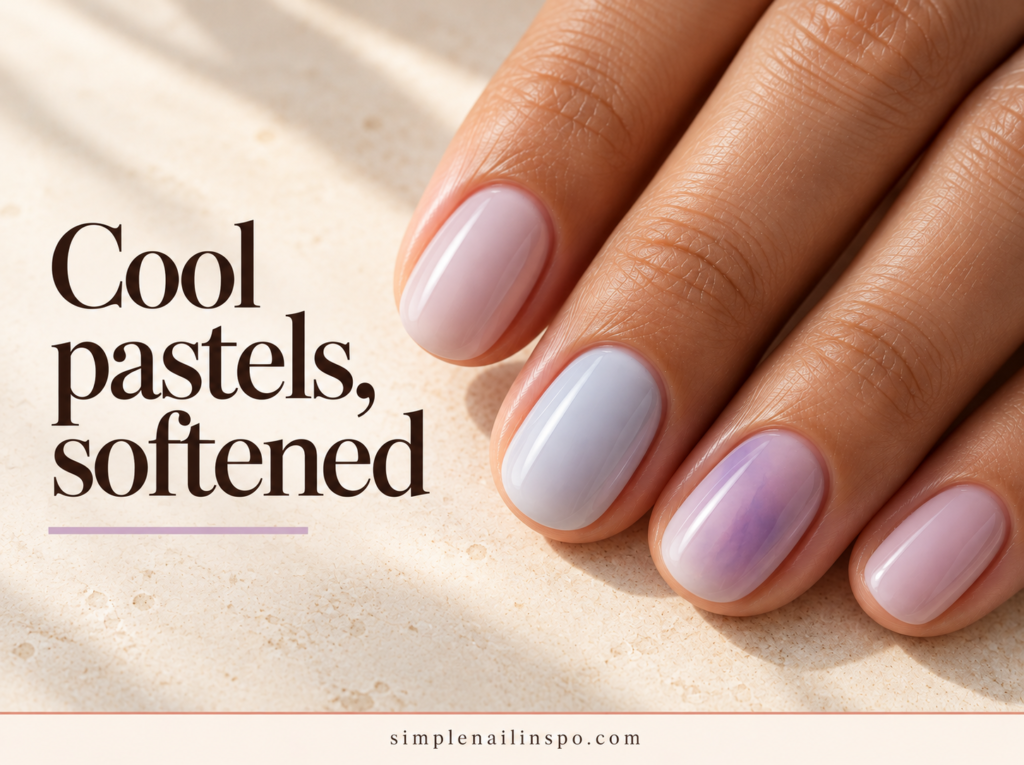
Blueberry milk and lavender milk nails both soften a pastel color with white, but they do different things on the hand. Blueberry is a pale cool blue. Lavender has a purple cast that may lean pink or blue. Put them side by side and you can see why a reference described only as “milky pastel” may lead to the wrong shade at a salon.
This guide compares 20 cool milky manicures in ten paired images. It starts with plain translucent shades, moves through blue-lilac transitions and then explores fine tips, small accents and gentle light-catching finishes. Each look keeps the nail color soft. The goal is to help you choose the undertone, coverage and detail that you would actually want to wear, whether your nails are short and natural or a little longer.
Editorial nail artists in Allure’s pastel nail color guide discuss pale blue and lavender milk as related but distinct directions. Their common quality is softness; the balance of blue, purple, white and translucency is what makes each one recognizable.
Choose blue or lavender milk
Start by comparing the colors in daylight. A true blueberry milk should read pale blue, even if it has a trace of gray. Lavender milk should read soft purple. Periwinkle sits between them, so it can be useful if you cannot choose. Next decide whether you want to see your natural nail faintly through the color. A sheer wash feels airy, while a creamier coat looks more like a full pastel manicure.
| If you want | Try | Ask for |
|---|---|---|
| A clean pale blue | 1 or 2 | Blue softened with white, not gray |
| A quiet purple | 5 or 6 | Lavender that still looks milky |
| Both colors in one set | 9, 10, 11 or 12 | Related undertones and similar coverage |
| Short nails with structure | 13 or 14 | A fine tip that follows the free edge |
| Light-catching detail | 17, 18, 19 or 20 | Fine pearl, soft glaze or one small accent |
Keep the comparison photograph visible while selecting polish. Bottle color can appear different once layered over your nail bed. If you want a simple no-art manicure, the first eight ideas provide plenty of choice. The later designs show how to add detail without turning the pale base into an unrelated bright or heavily decorated set.
Blueberry milk bases
1. Classic sheer blueberry milk
A translucent baby blue with a little white is the starting point. The natural free edge can remain faintly visible beneath the color, and a glossy finish keeps the cool shade from looking flat. Short rounded nails make this version feel fresh and uncomplicated. If the polish appears mostly gray indoors, choose a clearer blue; if it looks saturated, ask for a more diluted finish.
Salon request: Pale blue milk with soft translucency. Show how much of the natural nail line you want to see rather than specifying a fixed number of coats.
2. Creamier cloud-blue milk
Use a slightly more covering blue-white for a smooth pastel effect. It still looks soft, but the free edge is harder to see. This works if very sheer color reveals unevenness you would rather blur. Keep the blue pale enough that the result remains in the milky family instead of becoming a bright powder-blue cream.
Compare the pair: Idea 1 looks lighter and more translucent. Idea 2 gives more even coverage. Decide which finish you want on a test nail before painting a full hand.

3. Icy blueberry on short squovals
Shift the blue a little cooler and keep the squoval edge neat. The manicure feels crisp, but the polish should still have a softened white cast rather than the hard opacity of a solid pastel. This is a good reference if you enjoy silver jewelry or cool clothing tones. Check the color in daylight to make sure “icy” does not turn into a dull gray on your hand.
Shape note: The straight-ish edge makes the quiet color look deliberate. Gently rounded corners keep the short nail comfortable for daily use.
4. Dusty blue milk on short rounds
A little gray mutes the baby blue and makes it feel calmer. On short rounded nails, the result is soft rather than sharp. Keep enough blue visible so the shade does not become a plain cool white. This is a useful option when brighter pastels feel too spring-like but you still want the blueberry color family.
Compare the pair: Icy blueberry is clearer and cooler. Dusty blue is more muted. The difference is small in a bottle photograph but obvious when the two manicures sit side by side.

Lavender milk bases
5. Classic sheer lavender milk
Choose a light purple diluted by milky white, with enough translucency to keep the nail looking luminous. A glossy short oval is an easy shape for this color. It should read lavender rather than pink, while remaining softer than an opaque lilac cream. If the shade disappears in indoor light, try a little more purple pigment rather than adding a second accent color.
Best first step: Compare a warm lavender and cool lavender swatch beside your hand. Their undertones can change the look more than a small difference in opacity.
6. Creamy lilac milk
A creamier lilac gives slightly more coverage while keeping the color pale and gentle. It works on short squovals when you want a visible pastel with no art. The shade may appear almost white in bright light and more purple in shadow, so view the sample under both conditions before committing.
Compare the pair: Sheer lavender has more of a tinted-nail feeling. Creamy lilac looks more painted. Choose based on whether you enjoy seeing the natural nail underneath.

7. Pink-leaning lavender milk
A little rose in the purple makes this color softer and warmer. It is a useful bridge if you usually wear milky pink and want to try lavender without jumping to a cool blue-violet. Keep the shade translucent enough to retain a milk finish. On short ovals it looks delicate without needing a flower or bow.
Ask for: Lavender with a gentle pink undertone, not a pale pink polish relabeled as purple. A swatch beside both colors will make the difference clear.
8. Cool blue-lavender milk
Move the lavender toward blue and the manicure takes on a cooler, more ethereal mood. This shade can be close to periwinkle, but it should still read mostly lavender. A glossy medium oval offers a little more room for the subtle tone to show; short nails work just as well if the polish has enough color.
Compare the pair: Idea 7 has more rose; idea 8 has more blue. Both can be milky, so undertone is the main choice here rather than nail length.

Blue-to-lavender pairings
9. Alternating blueberry and lavender milk
Paint three nails pale blueberry and two nails lavender, repeating the arrangement on the other hand. Keep the shades close in depth and similarly sheer, so the colors look like a planned pair rather than two unrelated pastels. This is the simplest way to wear both without painting artwork.
For short nails: One color per nail keeps the result neat. A smooth glossy finish unifies the set even though the undertones differ.
10. Blue-to-lilac shade sequence
Use five related shades across the hand, beginning with milky blue and moving through periwinkle toward lilac. The transition should be gradual. If one middle nail is much more opaque or saturated, it breaks the quiet progression. Arrange the bottles or swatches in order before painting.
Compare the pair: Alternating colors looks playful and easy to repeat. A sequence asks for more polish choices but makes the blue-purple relationship the focus of the manicure.
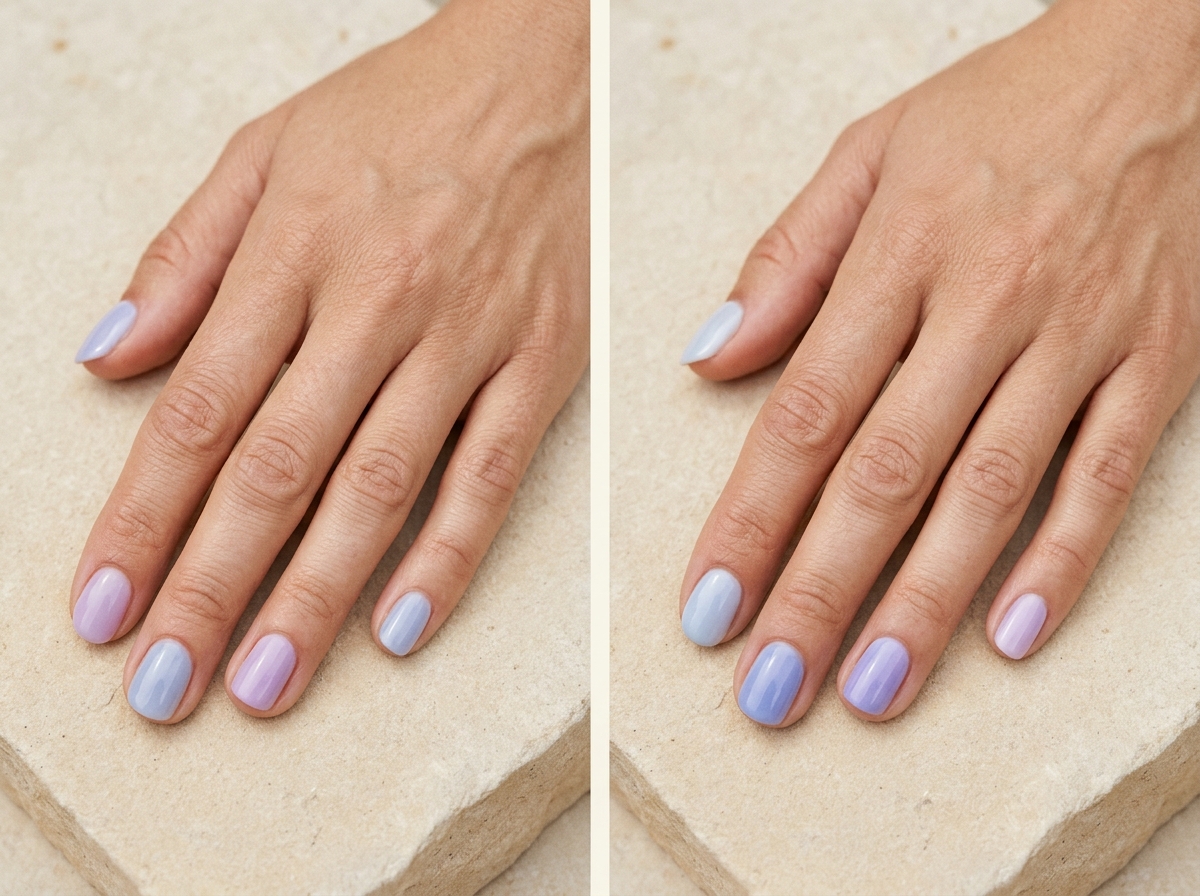
11. Periwinkle milk as the middle ground
Choose one shade balanced between blue and violet. Periwinkle milk can settle the decision when blueberry feels too cool and lavender too purple. Keep plenty of white in the mix for a softened finish. A plain short manicure lets the unusual middle tone be the point rather than hiding it beneath art.
Shade test: Hold a pale blue and a lavender swatch beside it. The periwinkle should look like a bridge, not simply a second name for one of the other colors.
12. Two-tone blue and lavender on one accent nail
Wear plain milky blue on most nails and divide one accent nail into two softly curved areas of blue and lavender. Keep the border gentle rather than making a hard color block. The accent shows how the colors sit together while the rest of the hand stays simple. On a short nail, make the split broad and clean rather than adding several narrow stripes.
Compare the pair: Periwinkle mixes the two colors into one shade. The accent nail shows them side by side. Choose the first for calm minimalism or the second for a little visible design.

Soft French and tip details
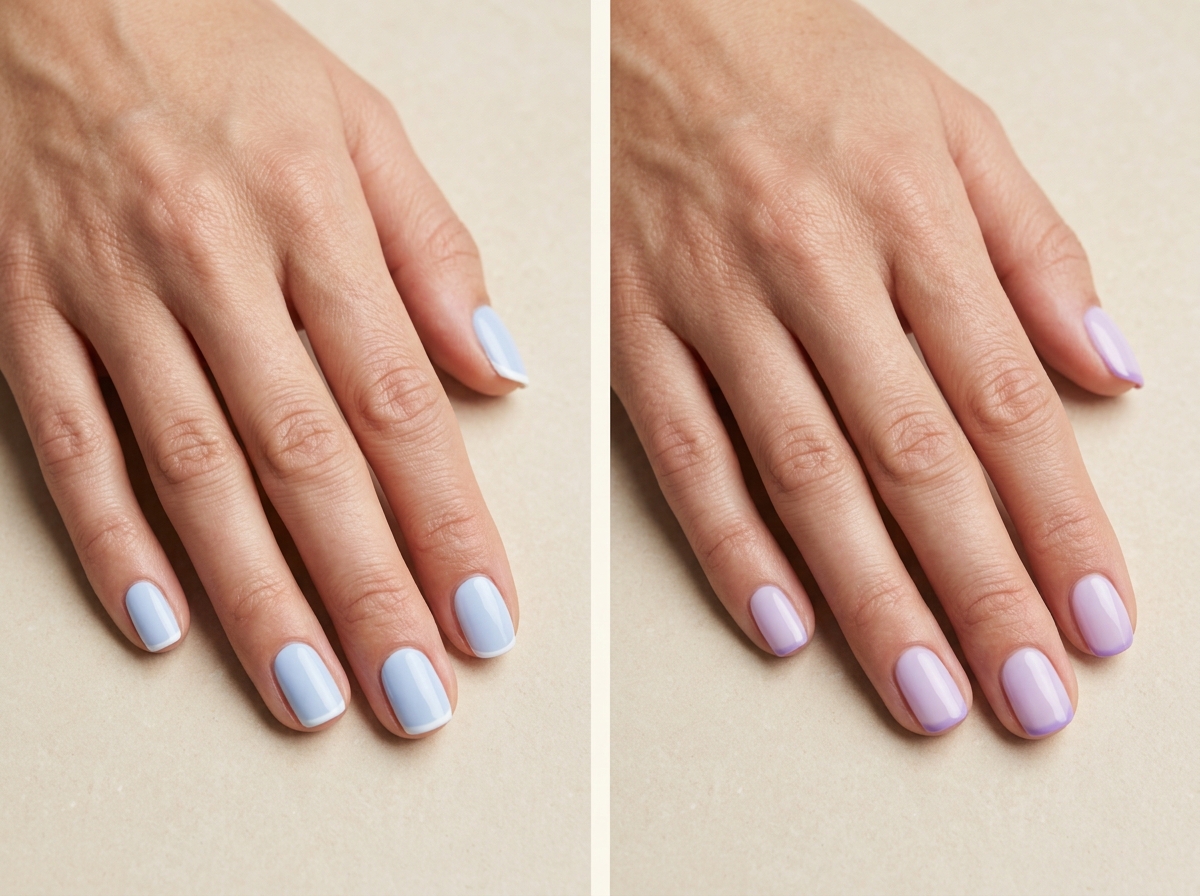
13. White micro French on blueberry milk
Draw a very fine white line along the edge of pale blue nails. The tip makes a short squoval look neat while leaving most of the blueberry color visible. Choose a soft white rather than a heavy opaque band if you want the design to remain airy. Keep the line close to the natural free edge, particularly on short nails.
At home: Test the line on one nail with a fine brush. If you cannot keep ten tips consistent, two accent tips and plain blue nails can still form a deliberate set.
14. Lilac micro French on lavender milk
Use a lavender base and a tip only a little deeper in lilac. It is a tonal French that shows best at close range, suitable for someone who wants detail without a bright white outline. The line must have enough difference in coverage to remain visible. A slightly more opaque lilac tip can do that without adding a darker color.
Compare the pair: White on blue gives a clean contrast. Lilac on lavender is softer and more monochromatic. Both can fit a compact nail if the line stays narrow.
15. Blueberry tips on a milky white base
Reverse the color balance: most of the nail stays translucent white, with a slim pale blue tip. This is useful if you want just a hint of blueberry rather than a fully blue manicure. A shallow curve follows the free edge on short ovals; medium almonds can carry a slightly deeper tip.
Color check: The tip should be distinctly blue beside the milk base, but still soft enough that the manicure does not feel like a bright color-blocked French.
16. Lavender side-swept tip on milk white
Paint a narrow lavender curve along one side of the free edge, leaving the other side mostly white. The asymmetry creates movement without filling the nail. Keep the same sweep direction across the hand, and use a lavender that remains pale against the milky background.
Compare the pair: The blueberry tip outlines the whole edge. The lavender side sweep decorates only part of it. For an almost flush nail, a single accent side sweep may be easier to fit than a full French line.

Tiny accents and glow
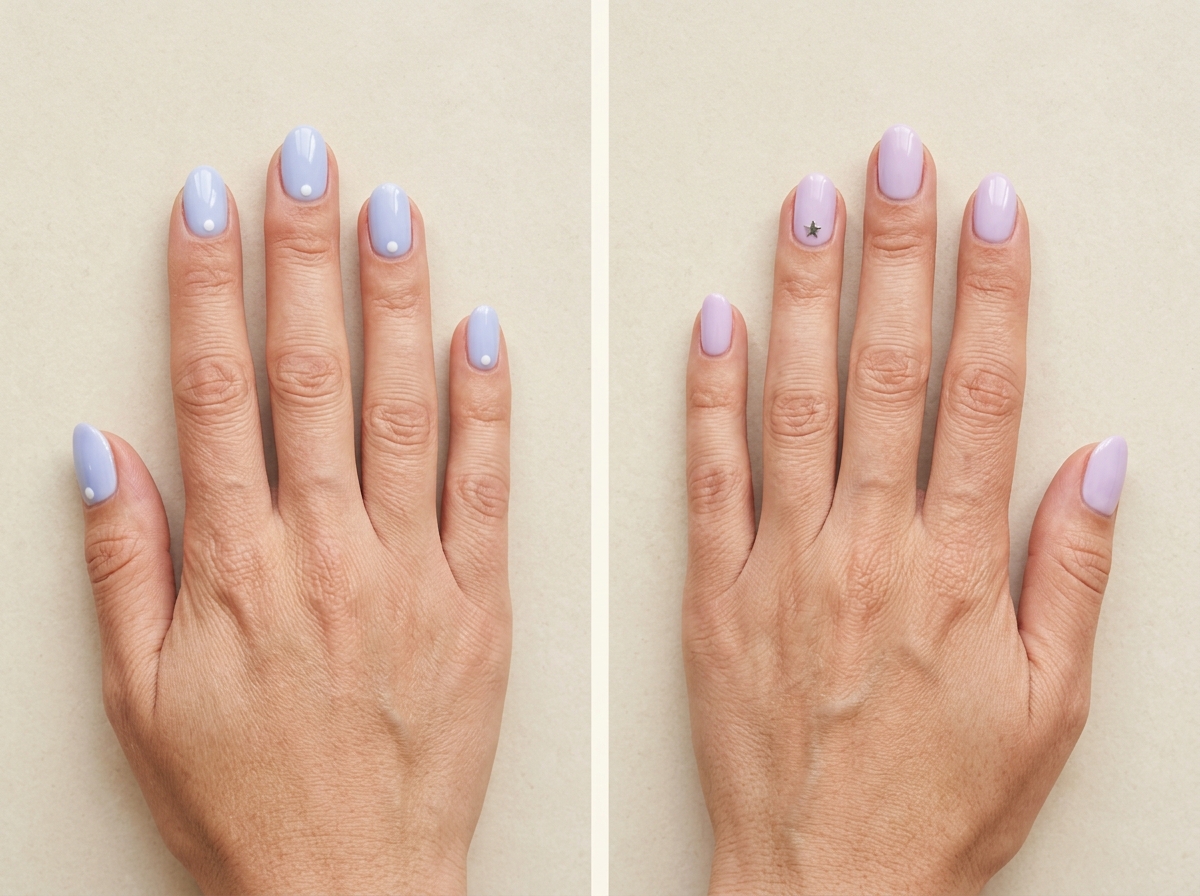
17. One white dot on blueberry milk
A single small white dot near the base of each pale blue nail creates a regular, quiet pattern. The placement gives the eye a detail to find without reducing the open milky surface. On very short nails, use a fine dotting tool and keep the dot flat rather than raised.
Why it works: White connects with the milkiness of the blue shade. A contrasting black or red dot would create a much stronger graphic mood.
18. Tiny silver star on lavender milk
Add one tiny flat silver star to a single lavender accent nail. Leave the remaining nails plain to keep the set soft. Place the star near the tip or to one side rather than in the center of every nail. The small metallic flash can make the lavender feel dreamy without adding a heavy chrome coating.
Compare the pair: Repeated white dots create rhythm across the hand. One silver star makes a focal point. Both are readable on short natural nails when scaled carefully.
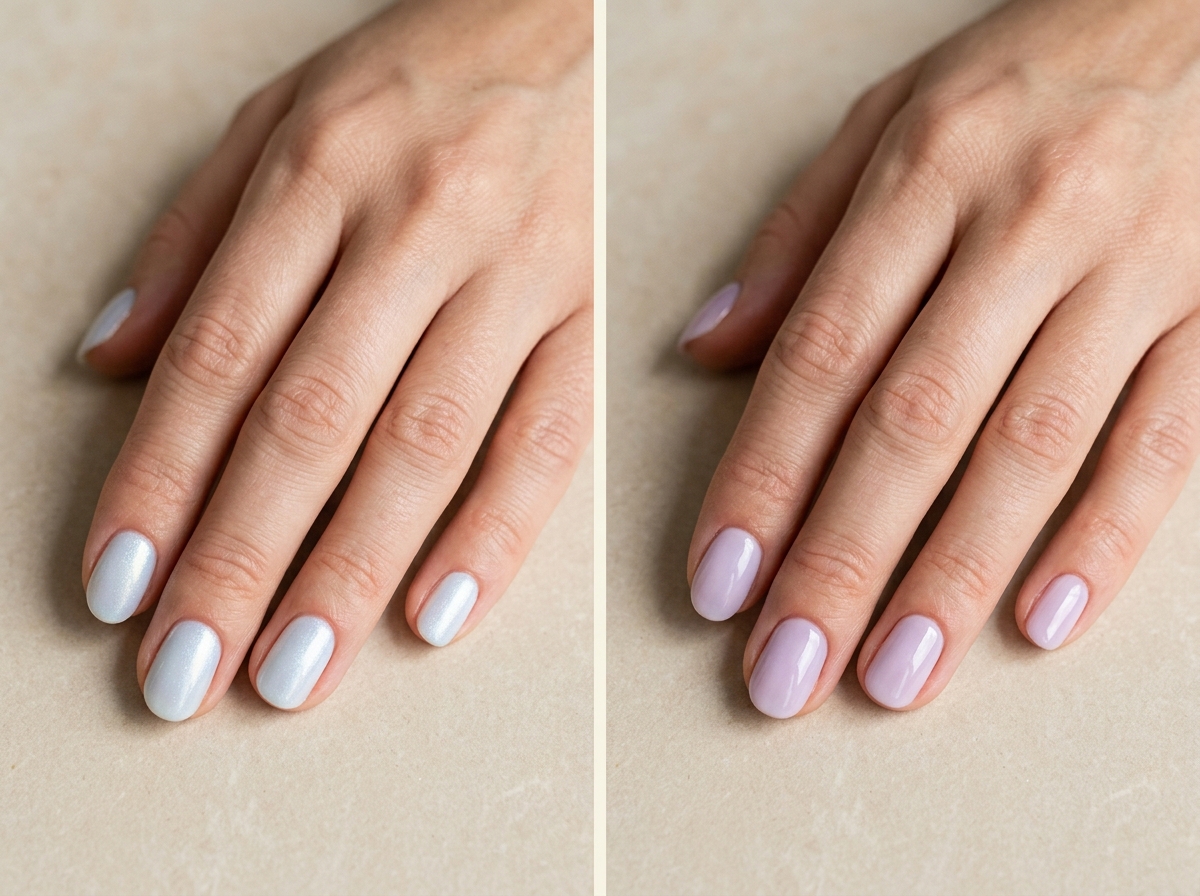
19. Pearl-blue milk
Fine pearl shimmer over a pale blue base adds a soft glow that changes as the hand moves. The blue should still be visible under the finish. Ask for small, evenly dispersed shimmer rather than large glitter pieces, which can make the manicure feel more decorative than milky.
Lighting check: Pearl can shift cool or pink under different lights. See a sample over the exact blue you intend to wear, since a pearl topper may look different over plain white.
20. Soft lilac glaze
Give a lavender base a gentle reflective sheen. The result is more surface-focused than pearl-blue milk, which has a fine shimmer through the finish. Keep the glaze light enough to leave the lilac color identifiable; a dense mirror layer can overpower it.
Compare the pair: Pearl catches light in fine points, while a soft glaze creates a smoother reflective sweep. Choose the amount of shine you want before adding a bow, star or other motif.
Get the shade and finish right
Tell the nail artist which of the paired colors you want before talking about details. “Pale cool blue, not lavender,” or “lavender with a blue undertone, not rosy lilac” is more actionable than “pastel milk.” Then specify whether the natural nail should show faintly, whether the finish should be glossy or pearly, and whether the design needs to fit short nails.
For home use with regular polish, paint one test nail and look at it in daylight. Pale pastel formulas can reveal streaks when applied in thick, repeatedly brushed layers. Use thin coats according to the product instructions and allow them to dry before adding a fine tip or dot. A compatible glossy topcoat can complete the look. For cured gel or chrome systems, follow the specific product directions with a trained nail technician.
If cool pastels feel too bright for fall, choose the dusty blue or a slightly grayed lavender, then leave the art minimal. Muted pastel shades can have a quieter seasonal feel; Byrdie’s discussion of dusty pastels offers another way to compare those lower-saturation tones. For warmer October ideas, see our beginner October manicure guide.
Frequently asked questions
What is the difference between blueberry milk and lavender milk nails?
Blueberry milk reads pale blue; lavender milk reads pale purple. Periwinkle sits between them. Both can be sheer or creamier, so identify the undertone and coverage separately when choosing a reference.
Can these colors work on short nails?
Yes. Plain sheer blue, dusty blue, lavender and periwinkle all work on short rounded or squoval nails. A micro French or a single tiny dot adds detail when there is little room for a larger design.
Why does my blueberry shade look gray?
The formula may contain a gray undertone, the coat may be very sheer over your natural nail, or the lighting may mute the blue. Compare a test nail in daylight with your reference. Choose a clearer blue if you want the color to remain recognizable indoors.
Do milky pastels have to be translucent?
Some translucency is part of the airy milk effect, but you can choose more coverage if you prefer. The creamier versions soften the free edge while still feeling pale. A fully opaque pastel may be attractive, but it will look different from a sheer milk reference.
How can I wear blue and lavender together without a busy manicure?
Alternate the two plain colors across the hand or place one two-tone accent nail among otherwise single-color nails. Match their depth, coverage and gloss so they feel related.
If you save three references, start with classic sheer blueberry for a clear blue, sheer lavender for a clear purple and periwinkle milk for the space between them. Seeing those three together makes the shade decision much easier than relying on a trend name alone.