24 Milky Nail Ideas: From Sheer White to Strawberry Milk
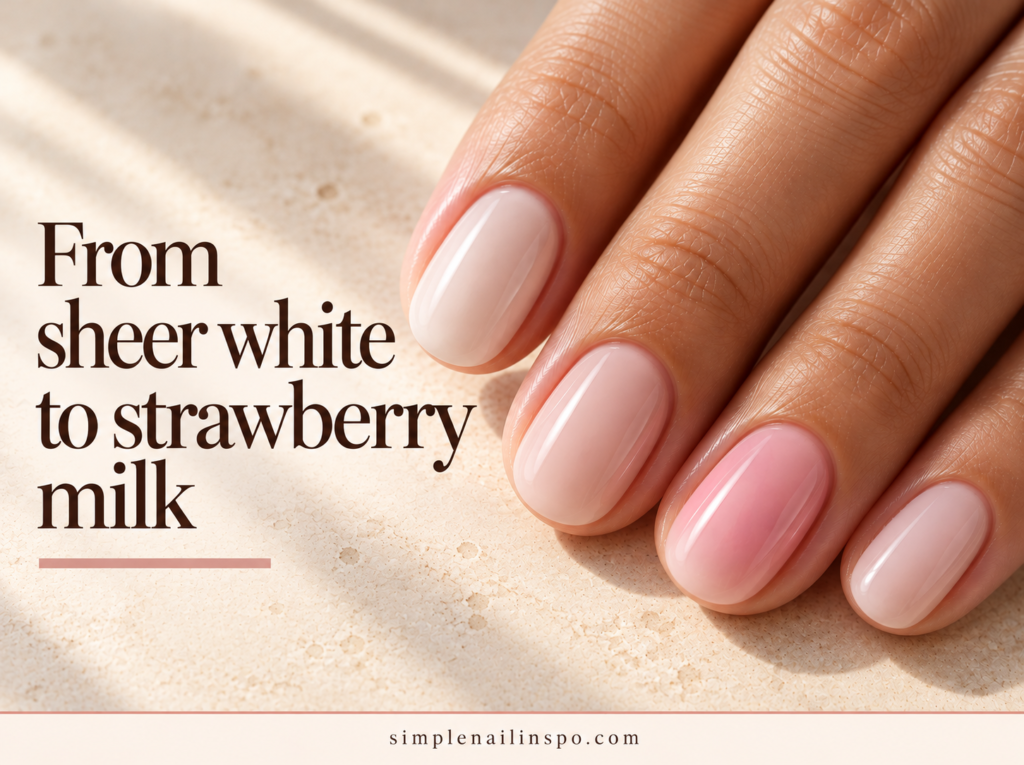
Milky nails sit in the sweet spot between bare and opaque. You can still sense the natural nail beneath a soft veil of color, but the overall effect looks smooth, clean, and deliberate. The classic version is a translucent white with a glossy finish. Add a little pink and it becomes strawberry milk; lean toward beige and it feels warmer and more natural; add a trace of shimmer and the same understated base begins to catch the light.
The name covers more than one manicure, which is why a reference photo alone can be frustrating at the salon. Does the white hide the free edge? Is the finish creamy or almost transparent? Is the shine coming from a glossy topcoat, pearl pigment, or chrome? Below are 24 ideas grouped by the choice that changes the result most. Each pair is designed to appear together in one image so you can compare two looks at a glance.
If you want to start with the defining version, ask for a semi-sheer, softly white finish with a glossy topcoat. Nail artists interviewed by Allure about milky manicures describe the effect as sitting between sheer and opaque. The exact number of coats depends on the polish and your desired coverage; showing the technician how visible you want your natural tip to be is more useful than asking for “two coats” without context.
The milky nail decision guide
| If you want… | Start with… | Ask for… |
|---|---|---|
| The cleanest classic | 1 or 2 | Soft white that still shows a little nail beneath |
| A warmer natural look | 5 or 6 | Beige or oat undertones, rather than stark white |
| A rosy look | 7 or 8 | Translucent pink, with no opaque candy-pink finish |
| A hint of color | 9 or 10 | Pale blue or lavender diluted by a milky base |
| Definition at the tip | 13 or 14 | A thin tip that does not overpower the base |
| Shine beyond gloss | 17 or 18 | Pearl or fine glaze, depending on how reflective you want it |
| Art on short nails | 21 or 22 | One small detail and plenty of clear space |
The essential white and soft cream finishes
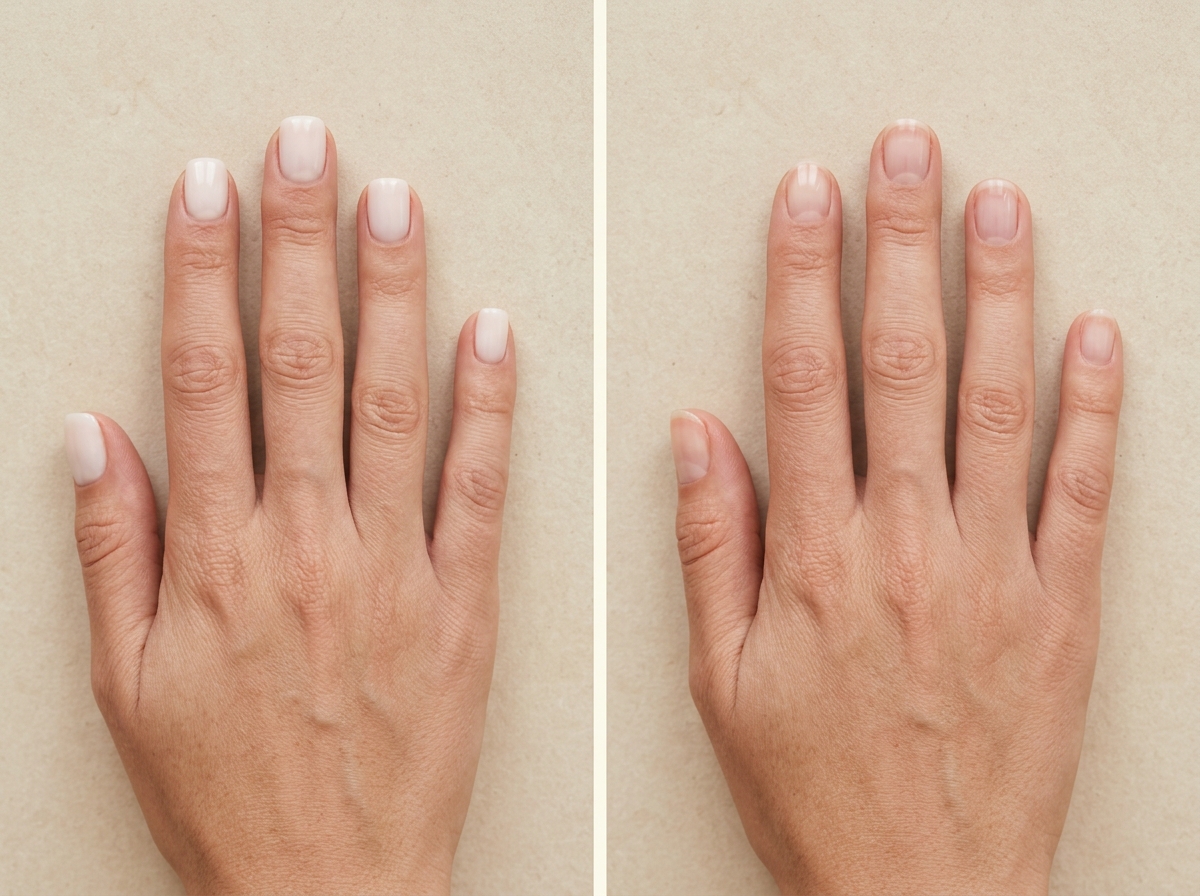
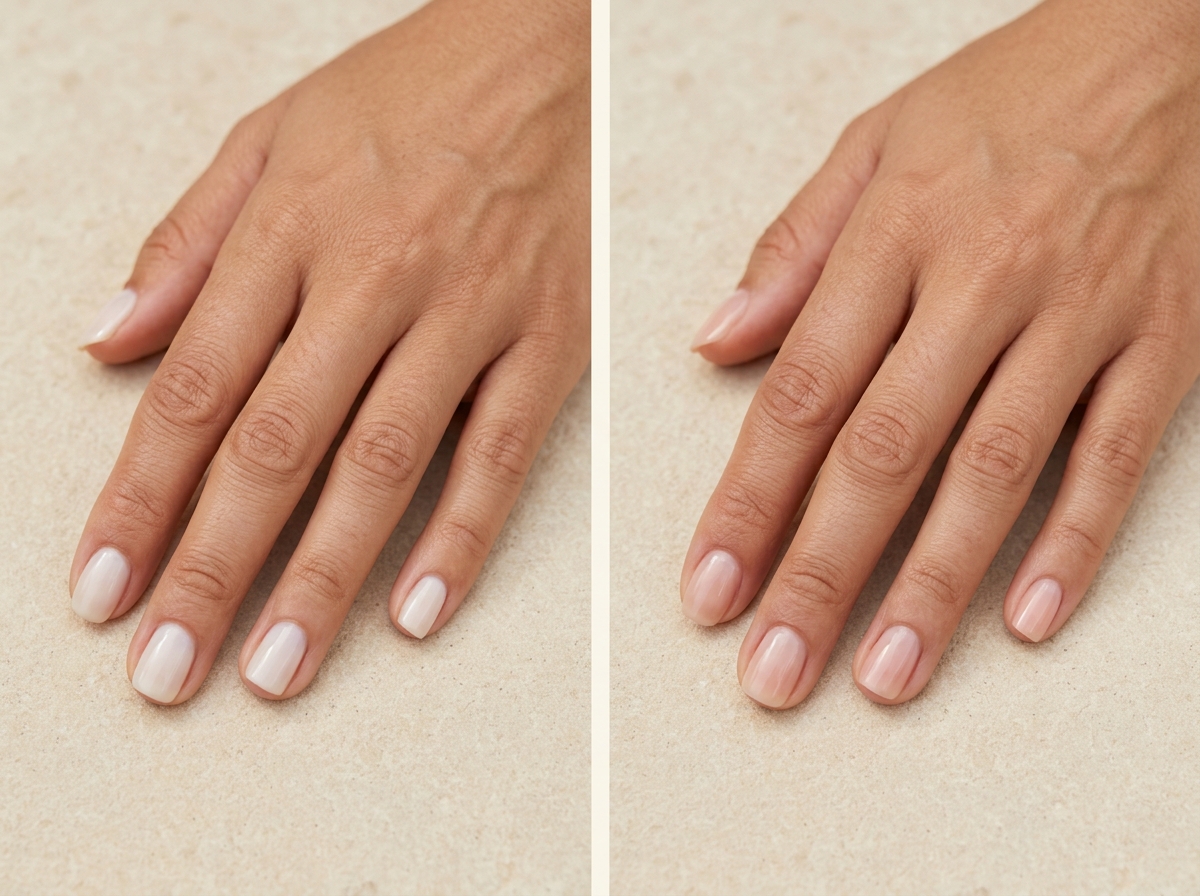
1. Classic milky white
This is the reference point for the whole family: a white veil that blurs the nail line without erasing it completely. It looks especially neat on short squoval nails because the soft color makes the free edge less stark while preserving a natural shape. Keep the finish glossy and the cuticle line tidy; with no decoration to distract the eye, the smoothness of the base does the work. If an example photo looks like correction fluid, ask for a sheerer white.
2. Barely-there milk bath
Take the classic down a level in coverage. The nail bed and free edge remain easier to see, as if the entire nail has been softened by a translucent filter. It is a good choice if opaque whites feel too bold or you prefer your natural nail to be recognizable. The tradeoff is that staining or unevenness beneath the polish may show. A more even base coat can help, but do not ask for extra white layers if the translucent effect is what attracted you.
3. Creamy vanilla milk
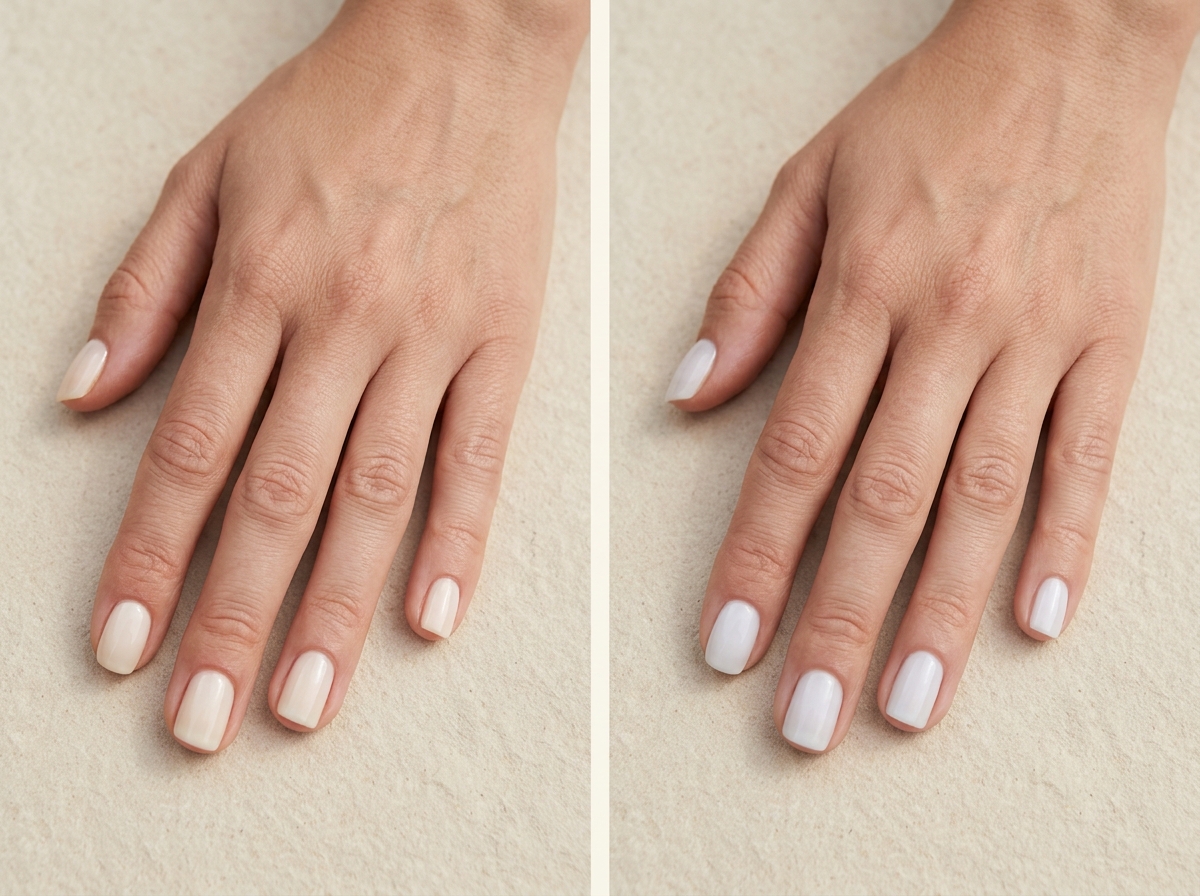
A little warmth turns white toward vanilla without making the manicure yellow. This is an easy neutral when your wardrobe leans toward cream, tan, camel, and gold jewelry. Compare the swatch beside your skin in daylight: the right creamy white should feel soft against your hand, while a shade with too much yellow may look dated. Keep the nail art absent or extremely sparse so that the subtle change in undertone remains the point.
4. Cool porcelain milk
This is the cooler companion to vanilla: a diffused white with a very faint blue or gray cast. On some hands it creates a crisp, clean contrast; on others it can look chilly, so test a swatch rather than assuming every white behaves alike. A medium sheer coverage keeps it milky. Once the white becomes solid and high-contrast, it reads more like a conventional white manicure. A soft square shape makes the cool tone look modern and composed.
Natural and rosy milks
5. Oat milk beige
Imagine the softness of milky white with a little beige stirred through it. Oat milk looks closer to the nail’s natural color and is forgiving as it grows out, particularly when the shade transitions gently near the cuticle. Ask for a translucent beige rather than a full-coverage nude. On shorter nails it can make the whole manicure feel quietly polished, with no visible design needed. Compare it with vanilla milk: oat is more beige; vanilla still reads primarily white.
6. Milky nude with a pink undertone
This is the “my nails, but more even” option for someone who finds beige alone too flat. A small amount of pink brings life to the base, while translucency allows the natural nail to remain visible. The best shade is not necessarily the one closest to your skin color; it is the one that looks intentional against both the nail bed and your hand. Ask for a swatch or sample nail if you are choosing between peach, rosy, and neutral nudes.
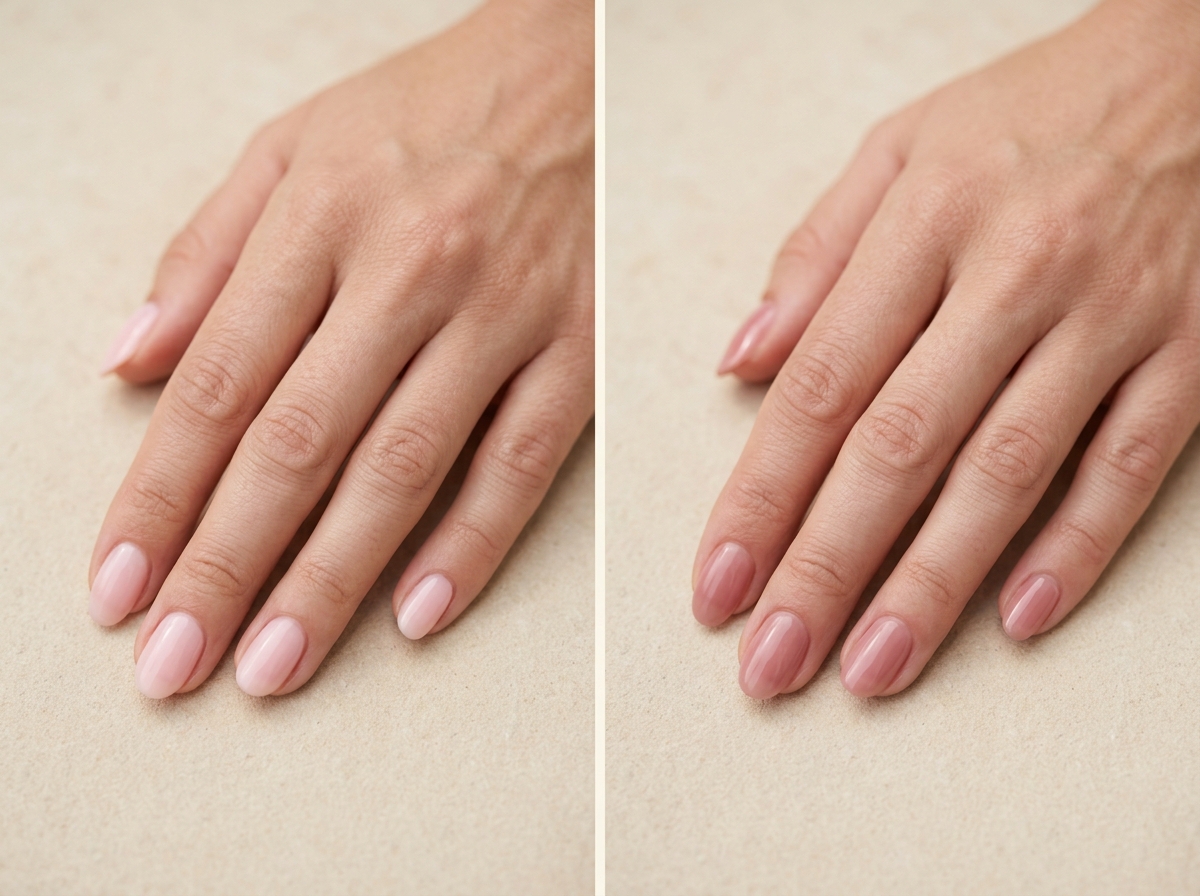
7. Strawberry milk pink
Strawberry milk is a sheer baby pink softened with white, not a bright strawberry-red manicure. Keep the color even and luminous if you want the delicate version. It is especially pretty on short ovals and medium almonds, where the curved outline reinforces the softness. Allure’s look at a strawberry milk manicure illustrates how the label can refer to a simple, translucent pink set. This version is deliberately plain, letting the delicate pink color stand on its own.
8. Rosewater milk
Rosewater is a touch more muted than strawberry milk: think a translucent dusty pink rather than pastel candy pink. It works well when you want a little color but still need a manicure that slips into office clothes, formalwear, and everyday outfits. Ask for the color to be visible mainly where the light hits the nail, with no sharply painted border at the cuticle. Side by side with strawberry milk, rosewater should feel calmer and slightly deeper.
A whisper of pastel color
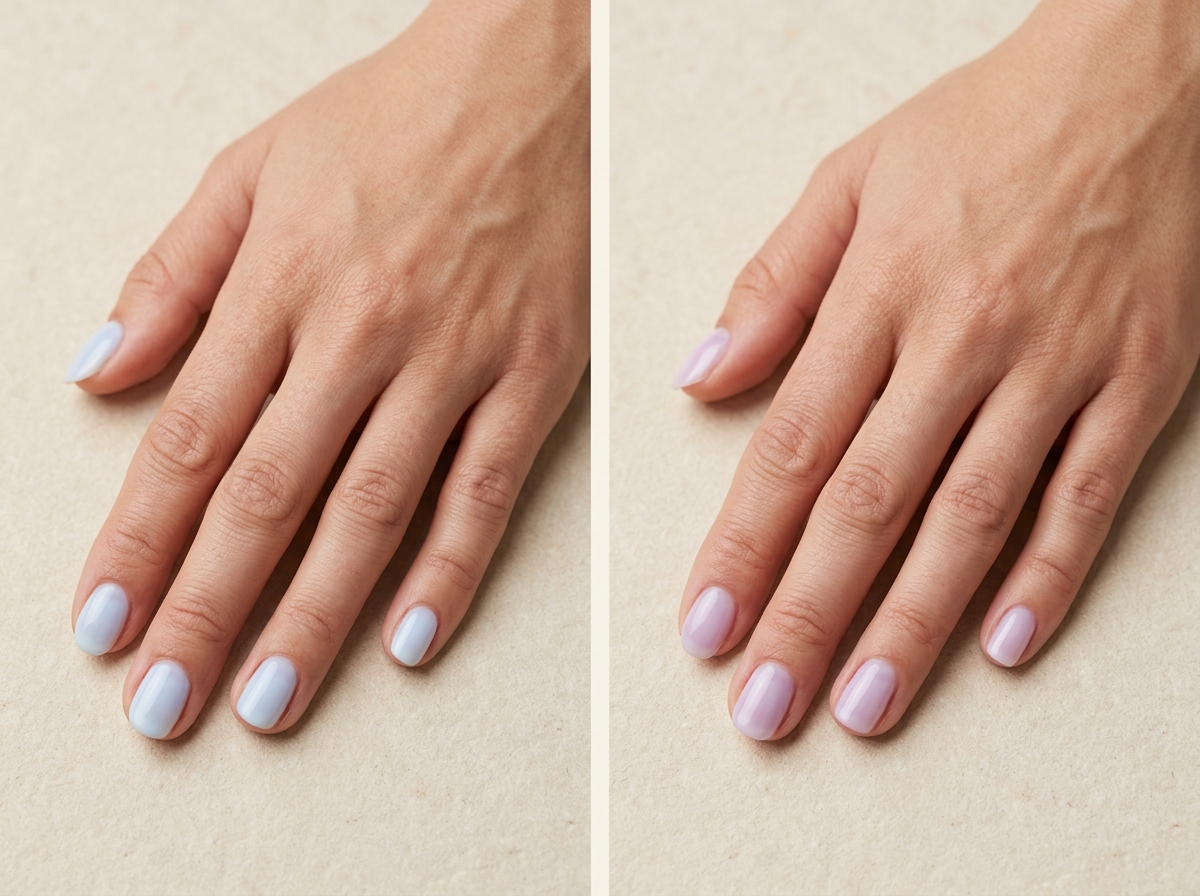
9. Blueberry milk
Blueberry milk is a pale blue softened by white. The most wearable version is light and slightly translucent, not an opaque powder-blue block. Its coolness gives a plain short manicure a clear personality without adding motifs. If your reference looks gray in dim light, ask for a cleaner blue; if it looks too saturated, choose a milkier mix. The shade pairs naturally with silver jewelry, denim, and pale neutrals, but it also makes a fresh contrast against darker clothing.
10. Lavender milk
Lavender milk occupies the space between pastel purple and a sheer white wash. It can lean pink-lilac or cool blue-violet; the two versions look surprisingly different beside the skin. Keep the color softly buildable, so the nail does not lose its milky quality. This is an easy alternative to pink if you like a romantic manicure but want a less expected shade. Allure’s discussion of milky pastels also separates pale blue from lavender milk.
11. Peach milk
A translucent peach wash makes the milky finish look sunnier without becoming an orange manicure. It is a useful transition between a barely-there nude and a pastel. Try it on short rounded nails for a fresh, simple set, or use a slightly stronger peach on only the tips for a quieter contrast. If peach shades tend to disappear against your skin, ask for a little more color in the base while preserving the soft finish rather than piling on an opaque third coat.
12. Pistachio milk
For a gentle move beyond pink and blue, choose a green with plenty of white in it. Pistachio milk should resemble a softened pastel green, not neon lime or dark sage. It gives a plain manicure enough character for a Pinterest close-up while remaining wearable on a compact nail. Compare several swatches beside your hand; a cool mint may look icy, while a warmer pistachio can feel creamier. One tiny white dot is optional, but the shade can carry the look alone.

Milky bases with defined tips
13. Milky French
Replace the usual clear pink base with a soft, translucent white, then draw a slightly brighter white tip. The contrast can be subtle, but it still needs enough separation for the French shape to show. This is a strong option when you love white nails yet want more structure than a single shade offers. The shorter the nail, the shallower the tip should be; a very deep white band can make a short nail bed look compressed. The contrast with a micro French becomes clearer in the next paired image.
14. Micro French on milky nude
Here the base is closer to a milky pink or nude, with a line of white so fine it follows the natural free edge. A micro tip gives short nails definition without taking up the entire edge. Keep the line consistent across the hand, even if the nail widths differ: the goal is a balanced visual weight, not a mechanically identical stripe on every finger. This is a practical starting point for someone trying nail art for the first time.

15. Blurred French
A blurred French keeps a lighter tip but softens the dividing line until it almost melts into the base. Unlike a crisp French, the effect depends on a smooth transition, so bring a reference that shows exactly how much white you want at the edge. This works beautifully on medium almond nails, though a short oval can carry a more compact gradient. Compare it with the full milky white: the free edge remains the brightest area even though there is no hard stripe.
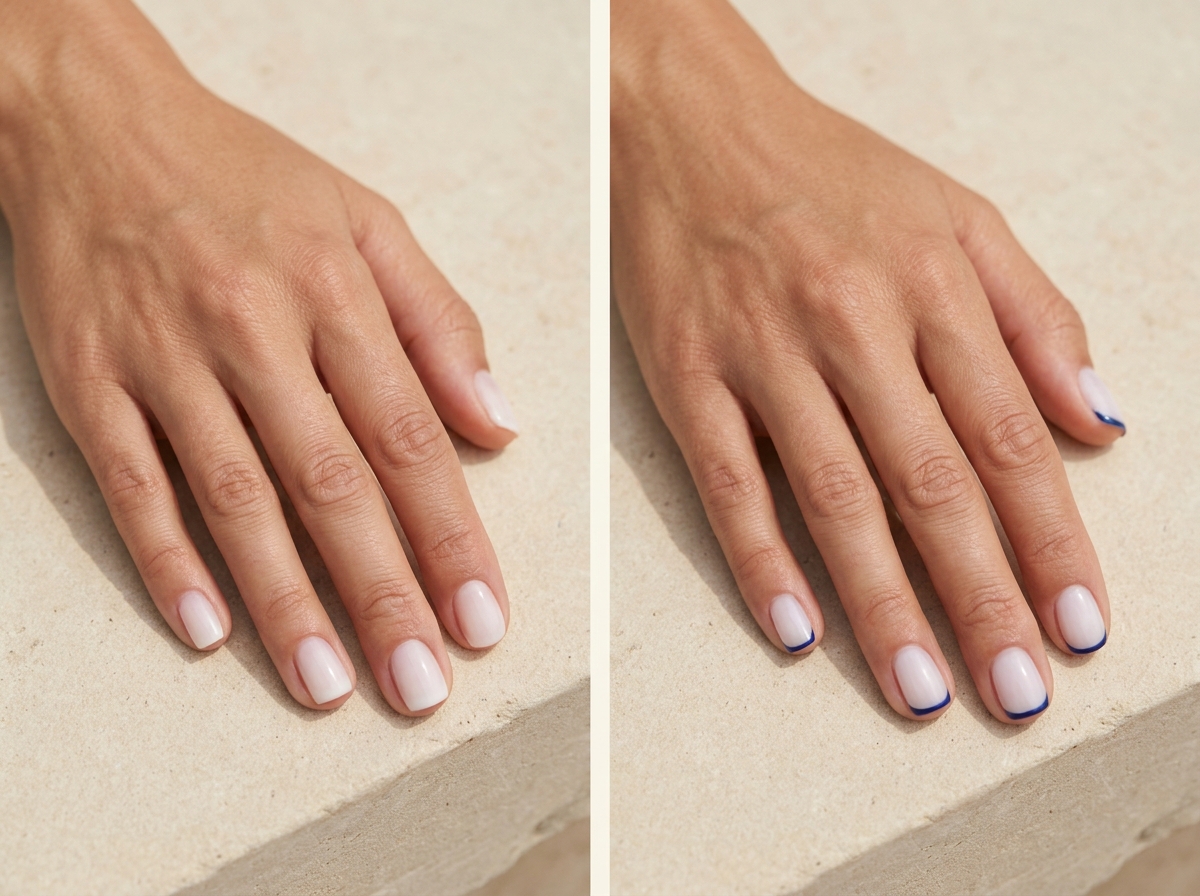
16. Milky white with colored micro tips
The milky base can serve as quiet space for a narrow colored outline. Chocolate, dusty rose, olive, or pale blue each changes the mood while keeping most of the nail light. Choose one color for the whole set if you want an editorial look, or alternate two closely related shades for a little playfulness. On short nails, keep the colored band slim. If you want more seasonal beginner ideas, browse our October nail ideas for beginners.
Pearl, glaze, and light-catching finishes
17. Pearl milk
Pearl milk keeps the base pale and translucent but adds fine, even shimmer. You should see a quiet glow as the hand moves rather than individual glitter pieces. It is a lovely choice for a wedding guest, a special dinner, or any day you want a neutral with a little life in photographs. Ask to see the finish under both daylight and indoor light; fine pearl can look understated in one setting and much brighter in another.
18. Soft glazed milk
Glazed milk has a more reflective, almost luminous surface than pearl milk. A delicate glaze over a milky base is enough; a heavy chrome layer can hide the softness of the underlying color and move the design into full mirror territory. Compare the two side by side: pearl has a subtle shimmer distributed through the finish, while glaze reads as a sheen across the nail. For a low-key version, keep every nail the same and skip accent charms.
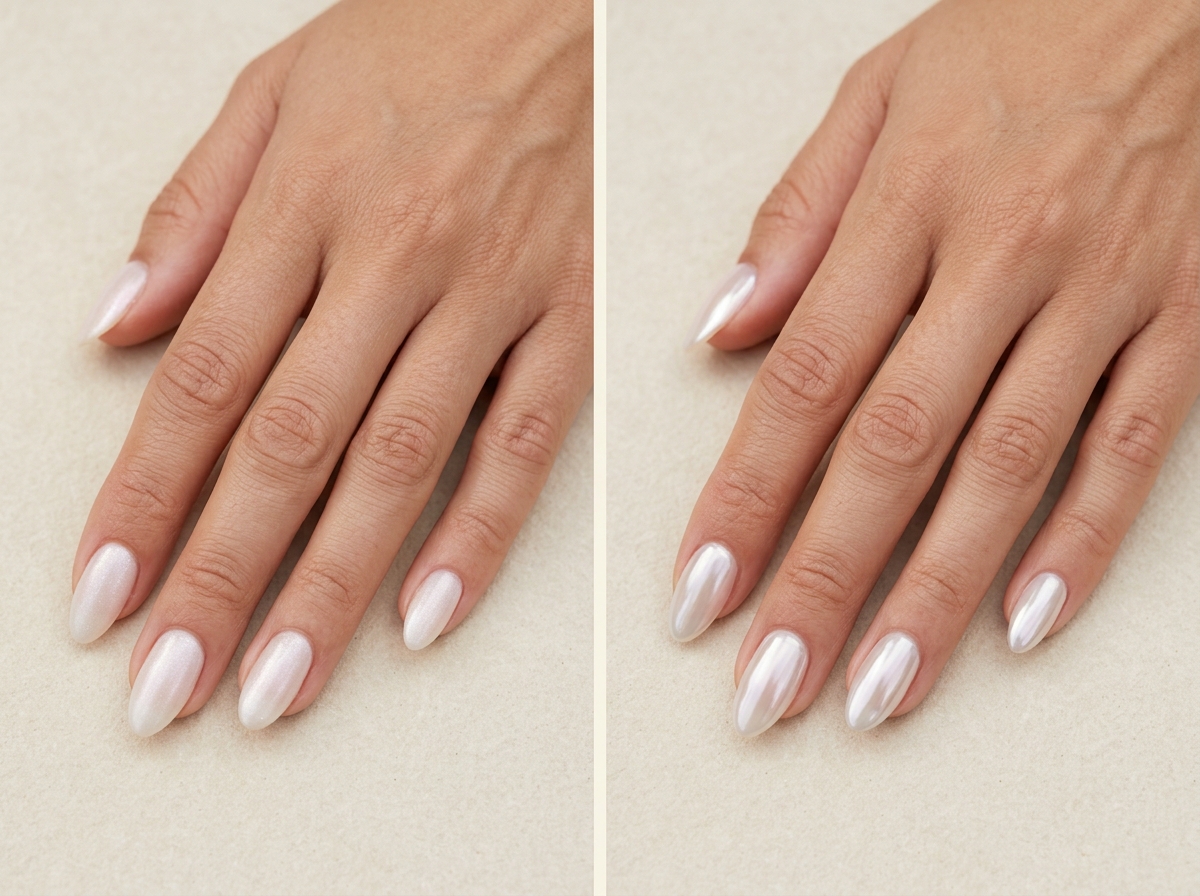
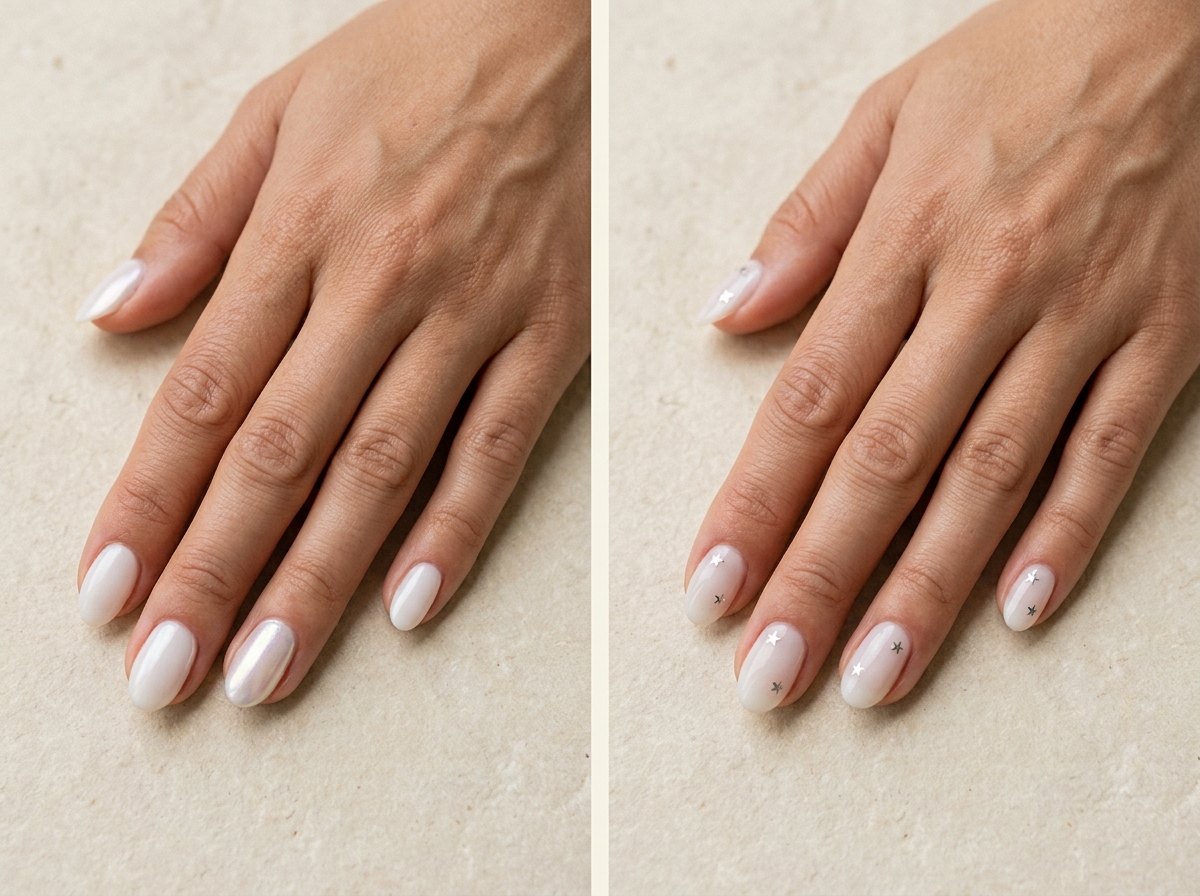
19. Milky chrome accent nail
If you are curious about chrome but not ready for ten reflective nails, glaze only one nail on each hand. The other nails stay classic milky white, so the effect feels like a quiet change in texture rather than a new color story. Choose the ring finger for a familiar accent or the thumb for a detail that appears in close-up photos. Keep the chrome in a pearl or pale silver family; a dark mirror accent would draw the eye away from the milk base.
20. Milky base with tiny silver stars
One or two miniature silver stars on a translucent white base create a night-sky suggestion without filling the nail with decoration. Placement matters: a single star near the cuticle feels restrained, while a small pair at different heights gives a little movement. Leave the surrounding nails plain or repeat one star per hand. This is an approachable bridge between a neutral manicure and more decorative art, particularly if you prefer short nails and small details.
Small details that keep the milk base visible
21. One white dot on each nail
Place a single small white dot near the base of each milky nude nail. The design is simple enough to read on very short nails and looks deliberate when the dots sit at roughly the same distance from the cuticle. White-on-milk contrast is subtle; if you want the dots visible from farther away, choose a slightly more opaque white for the art. This is a good at-home option with a dotting tool after the base has dried.
22. Tiny strawberry accent
Wear plain strawberry milk pink on most nails and put one miniature strawberry on a single accent nail. The fruit should be small enough that the translucent base still dominates the design. A flat painted motif usually feels lighter than a raised charm on a short nail. Choose the same pink for the fruit’s surrounding nails rather than adding several unrelated colors. It adds a playful note while leaving the milky pink base in view.

23. Milky white with an amber corner
A small amber mark in the outer corner of one or two milky white nails brings a hint of fall without turning the manicure dark. Think of a translucent drop, narrow curve, or small rounded shape rather than a large block of orange. Keep the remaining nails plain, and choose a warm milky white to connect the two colors. This is useful when your seasonal Pins need a look that still fits the Milky Nails category. For bolder themed art, see our Halloween nail art ideas.
24. Milky nude with a fine gold curve
A single thin gold curve across one accent nail brings a jewelry-like detail to a nearly bare base. It can arc near the tip, trace one side, or cross the nail diagonally; choose one placement rather than stacking all three. The line should be fine enough that the nail still reads milky nude first. Compared with amber, gold is less seasonal and can move from daily wear to an event without changing the rest of the manicure.

How to ask for the result you actually want
Bring one reference for the color and another for the coverage if no single photo shows both. Tell the nail artist whether you want the natural free edge to remain visible, whether your white should lean cool or warm, and whether the finish should be plain glossy, pearly, or lightly glazed. If you choose art, point to the exact nail and placement. “Milky white with one tiny amber detail on the ring finger” is easier to reproduce than “something soft and autumnal.”
Shape also changes the picture. Short squoval nails make the plain white and micro French designs feel neat and practical; round nails soften pastel shades; medium almonds give blurred tips and pearlescent finishes more room to glow. A beautiful design on a long reference nail may need smaller art and a thinner French line on your own shorter nails. Ask for that adjustment rather than trying to fit the original design into a different canvas.
For an at-home manicure with regular polish, start with clean, dry nails and thin layers. Allow each layer to dry according to the product directions and finish with gloss if that is the look you chose. A sheer color may show brush marks if applied too thickly; two careful thin coats often look smoother than one heavy coat, though coverage varies by formula. Do not mix directions for regular lacquer with directions for gel products. If you choose a cured gel or builder system, have it applied and removed according to that specific product’s instructions by a trained technician.
Which milky nails should you save first?
Choose classic milky white if you want the simplest all-purpose reference, oat milk beige if you want warmth and subtle grow-out, and strawberry milk pink if you want a little color while keeping the translucent finish. For short nails with a detail, the milky nude micro French and one white dot are easy to understand from a close-up photo. For an event, compare pearl milk with soft glazed milk before deciding how much shine you want.
The most useful screenshot to take to your appointment is the paired image closest to your choice: it shows both what you want and the nearby version you do not. That small comparison can settle the questions that the broad phrase “milky nails” leaves open.
Quick questions
Are milky nails the same as opaque white nails?
No. The classic milky look has some translucency and a softened appearance. You can ask for more coverage, but once the natural nail is completely hidden beneath a stark white, the result changes character. Compare ideas 1, 2, and 4 to choose your preferred level of visibility.
Can milky nails work on very short nails?
Yes. The plain white, oat milk, strawberry milk, micro French, and single-dot versions are particularly easy to adapt. Keep the detail small enough to leave breathing room around it. Allure has shown a short squoval milk-bath manicure as an example of the finish on a compact natural shape.
What is the difference between pearl and chrome on a milky base?
Pearl adds a fine, gentle shimmer; a glaze or chrome layer adds more obvious reflection at the surface. The exact appearance depends on the pigment, topcoat, and lighting, so compare a real swatch with your reference photo before application.
Do I need gel to get milky nails?
No. A sheer or semi-sheer regular polish and a glossy topcoat can create the look. Gel and builder systems are other routes, but the product system is separate from the appearance. Choose the application and removal method that fits your preferences, then specify the color, coverage, and shine you want.