
22 Fall BIAB Nail Ideas for Short Nails: Mocha, Olive, Burgundy, and More
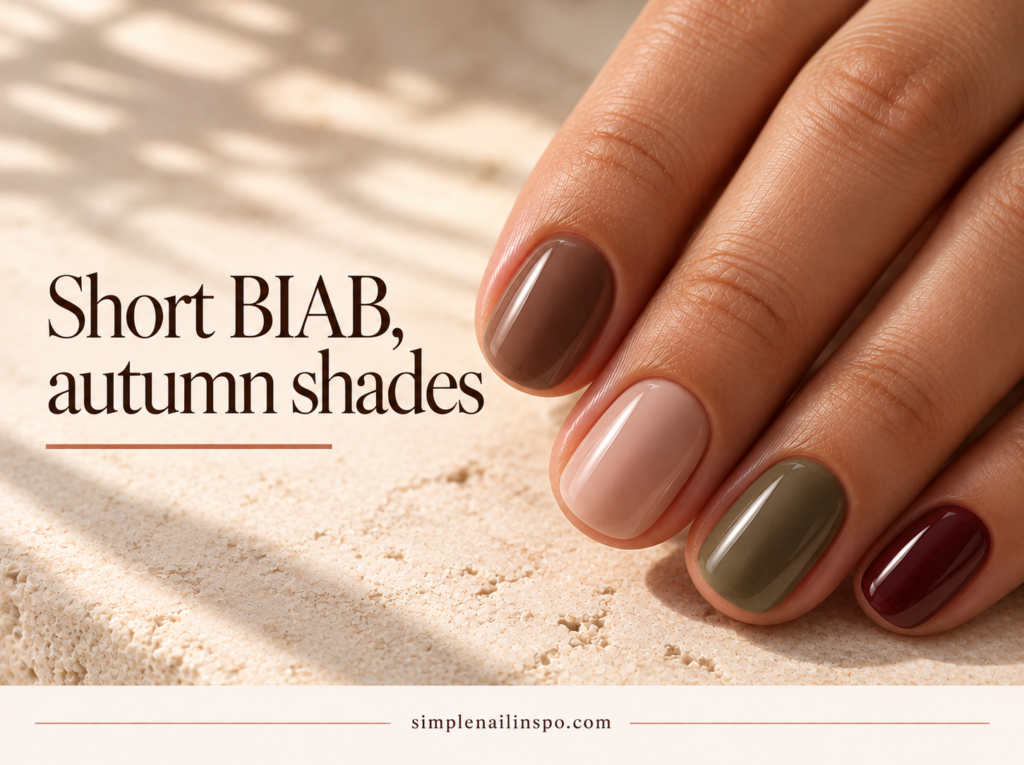
Fall color does not need a long nail to make an impression. A glossy mocha on short rounds, an olive tip over a neutral base, or a single cinnamon accent can carry the season without covering every finger in autumn artwork.
These 22 fall BIAB nail ideas focus on color combinations that fit a compact manicure. There are solid shades, fine edges, restrained patterns, and a few light-catching details. Choose the amount of contrast first, then decide whether you want the color everywhere or only on an accent.
BIAB™ is The GelBottle’s branded builder range. The colors and designs below are visual requests for a manicure over an appropriate overlay; they do not imply that every shade is itself a BIAB product. Your technician can explain which colors come from the builder layer and which are painted over it.
Choose your version
Look at the coats, knitwear, and jewelry you actually wear in autumn. If your wardrobe already contains warm camel and brown, mocha or terracotta will feel connected. If you lean toward charcoal and navy, try smoky plum, slate, or a cooler burgundy.
A dark full-color manicure looks quite different from the same color used as a threadlike tip. When you like a shade in a photograph but hesitate about wearing it, choose the smaller placement first. Short nails make small blocks of saturated color feel purposeful.
| Your priority | Looks to consider | Detail to specify |
|---|---|---|
| Warm and easy to coordinate | 1–4 | Brown undertone and gloss |
| Earthy with a green accent | 5–8 | Muted rather than neon color |
| Deep jewel-like color | 9–12 | How dark it looks indoors |
| A little autumn artwork | 13–16 | One motif per accent |
| Evening shine | 17–20 | Fine shimmer or a small metallic detail |
| A coordinated mixed set | 21–22 | Repeat one base color |
Coffee and caramel shades
1. Glossy mocha rounds
A medium mocha on short rounded nails gives a clear autumn mood with very little decoration. Look for a brown with enough milkiness to remain visibly brown in shade. Gloss keeps the flat color from looking heavy and brings out the curve of a tidy short shape.
Pair it with cream knitwear or a pale sleeve if you want the manicure to stand out in everyday photographs. The contrast comes from the surroundings, so the nails need no additional art.
2. Espresso squovals
Espresso brings more drama than mocha, especially on softly squared nails. Choose a brown-black shade if you like dark manicures but want a warmer alternative to black. Keep the outline short and consistent so the rich color looks precise.
Check a sample in ordinary light: some espresso shades appear almost black once applied. If seeing the brown undertone matters, compare it directly with mocha before choosing the deeper option.

3. Caramel with one cream nail
Use caramel across four nails and a warm cream on the ring finger. The cream interrupts the brown just enough to make the set feel composed. Both colors should share a warm undertone so the accent does not look stark.
This is an accessible way to try a mixed manicure without committing to a full five-color palette. Repeat the same arrangement on both hands, or move the cream accent to the opposite middle finger for gentle asymmetry.
4. Toffee and cocoa alternating nails
Alternate a golden toffee with a deeper cocoa in a simple two-color rhythm. Similar shine levels keep the set cohesive even though the shades are clearly different. Short oval nails soften the color changes.
Avoid adding a third brown unless it serves a clear purpose. The light-dark alternation already provides interest. A slightly less saturated toffee will feel quieter than a strong orange caramel, particularly beside deep cocoa.

Soft earth tones
5. Muted olive full color
A gray-leaning olive can feel almost neutral on short nails. It has enough color to be interesting but pairs naturally with beige, black, and denim. A glossy surface stops the muted pigment from appearing chalky.
Compare olive with khaki before your appointment; the words are often used loosely. Point to whether you want a green undertone or a yellow-brown one. That difference matters more to the finished manicure than the shade’s marketing name.
6. Sage base with olive accent
Wear a soft sage on most fingers and a deeper olive on one accent nail. The two greens make a tonal set with a little more dimension than a single-color manicure. Keep both shades muted for a calm result.
This works well when you enjoy green but find a whole hand of dark olive too strong. The accent can sit on the thumbnail if you want it to appear most clearly when holding a mug or phone.

7. Terracotta short ovals
Terracotta gives autumn color a warm, clay-like feeling. Choose a softened red-orange rather than a brilliant pumpkin shade, and keep the shape short enough that the color remains the focus. A smooth glossy finish gives it a polished everyday look.
If terracotta seems too orange beside your skin, look for a rose-brown version. You can keep the same autumn direction while changing the undertone to something you enjoy wearing more often.
8. Oat beige with a mustard side tip
An oat-colored base makes a small mustard accent feel deliberate. Place the mustard as a slim diagonal corner on one or two nails, leaving the rest plain. The asymmetry gives the manicure movement without requiring a detailed pattern.
Keep the mustard area smaller than the exposed base. On a tiny nail bed, a painted corner can become a broad color block surprisingly quickly. Use the thumbnail for the largest version if you want one stronger accent.

Wine, plum, and inky color
9. Glossy red-wine nails
A red-wine shade gives short nails an immediately dressed-up feeling. Choose a color that retains some red in indoor light rather than collapsing into black. Rounded or squoval edges both work; the depth of color supplies the drama.
Leave the nails plain if you wear statement rings. A rich full-color manicure and a metal ring already create contrast, and adding foil or gems can compete with the simple effect.
10. Smoky plum overlay look
A softened plum offers a cooler route into autumn. The ideal shade here looks like purple mixed with a little gray, rather than bright grape. It pairs neatly with charcoal sleeves and silver jewelry.
Ask whether the color will be semi-sheer or fully covering. A translucent plum feels juicy and layered, while an opaque version looks more velvety even under gloss. Choose the effect intentionally instead of expecting the two finishes to look interchangeable.

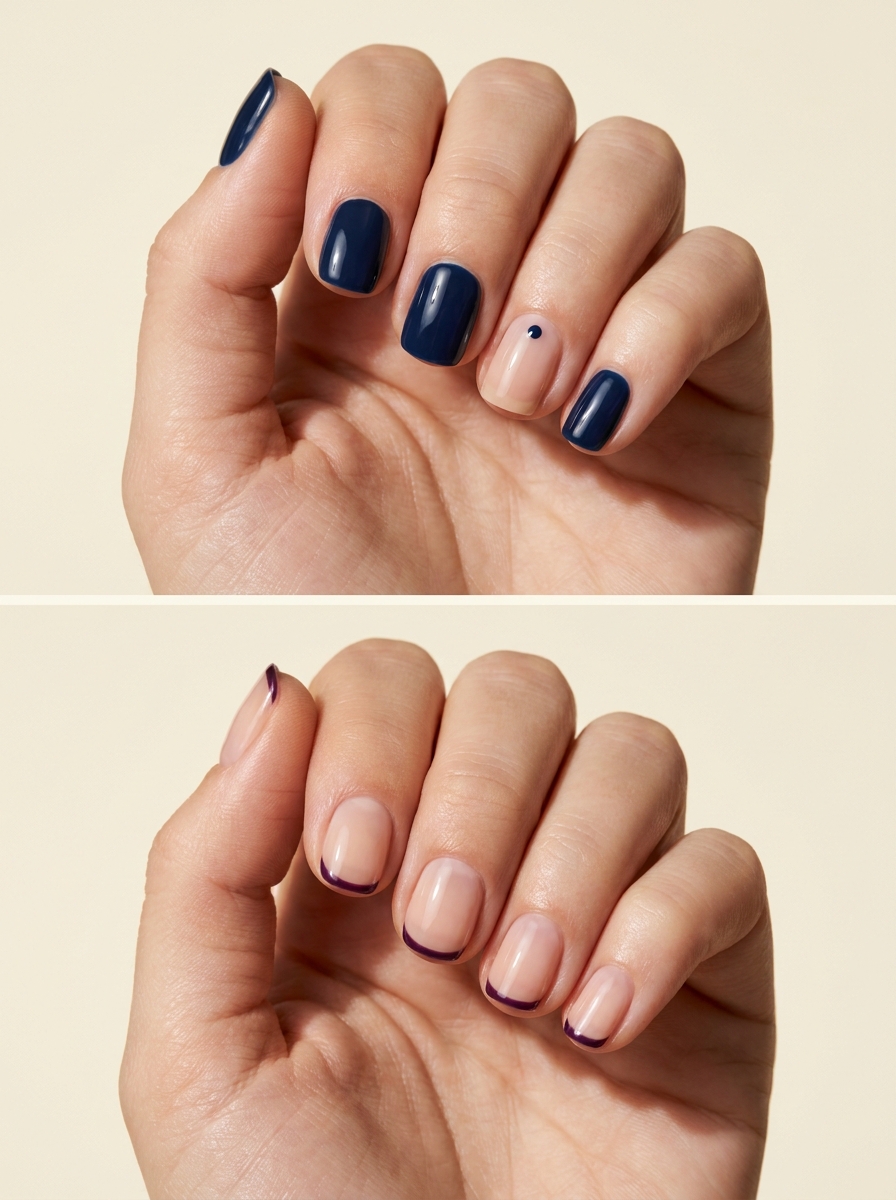
11. Deep navy with a bare accent
Paint most nails in inky navy and leave one accent softly neutral with a tiny navy dot. The bare-looking nail gives the eye a resting place and connects the dark polish to the natural hand. A single small mark is enough.
Keep the dot away from the very edge, where it may look accidental. An off-center position in the lower third makes it read as a deliberate echo of the navy nails around it.
12. Aubergine micro French
Use deep aubergine only along the tips of a sheer neutral manicure. The narrow placement makes a dramatic shade easier to wear while still giving a clear fall feeling. A curved tip feels softer; a side tip looks more graphic.
Choose a base with enough warmth to avoid a washed-out combination if the aubergine is very cool. This is a good compromise when you enjoy dark seasonal colors but prefer the openness of a French manicure.
Small autumn details
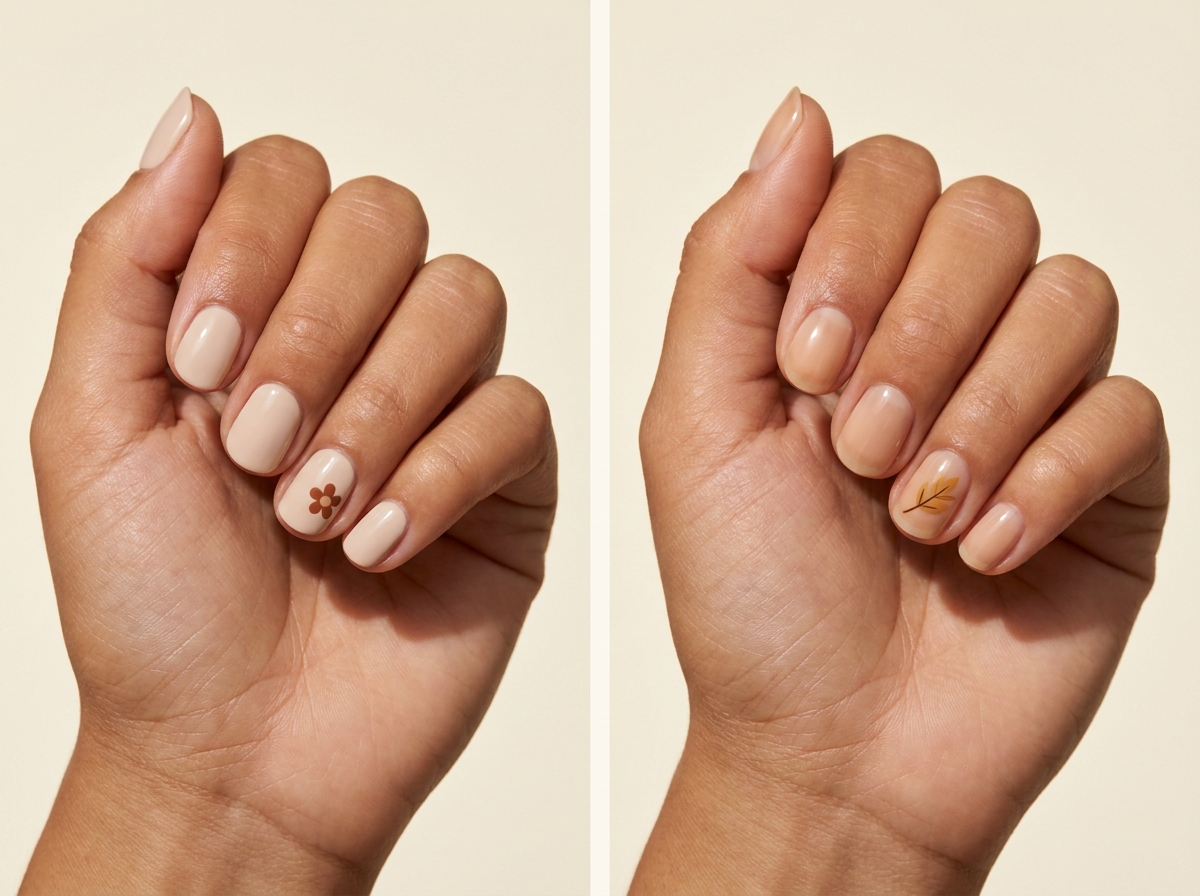
13. Cinnamon dot flowers
Put one small cinnamon flower on a neutral ring fingernail and keep the remaining fingers softly beige. Rounded petals and a tiny dark center make the motif recognizable without needing a stem or leaves. Leave plenty of base around it.
Position the flower near one side rather than directly in the center if the nail is short. That placement allows the shape to feel airy instead of becoming a badge that fills the available space.
14. One fine ochre leaf
A single ochre leaf on a warm sheer base gives a seasonal detail without a full foliage pattern. Let the leaf angle gently across an accent nail, with the other nails remaining plain or caramel-colored. The slender silhouette matters more than intricate veins.
For the smallest nail beds, ask for a simple leaf outline. A filled leaf can look heavier at the same size. Keep any stem fine enough that it supports the motif rather than dividing the nail.
15. Cream and brown windowpane accent
Use a cream accent nail with two or three fine brown lines suggesting a windowpane pattern. Surround it with plain cocoa nails to keep the set restrained. A partial grid feels lighter than a full tartan.
Short nails do not need many intersections for the idea to register. Ask the artist to leave some open cream space at the sides and avoid stacking several different line colors. The simple structure is part of the appeal.
16. Tiny rust half moons
A small rust crescent near the base of each nail gives a reverse-French variation with an autumn palette. Keep the rest of the nail a warm nude. The repeated crescent creates a quiet rhythm across the hand.
Leave a neat margin between the painted detail and the surrounding skin. If a full set of crescents feels too graphic, put them only on the middle and ring fingers and leave the other nails plain.

Subtle light and texture
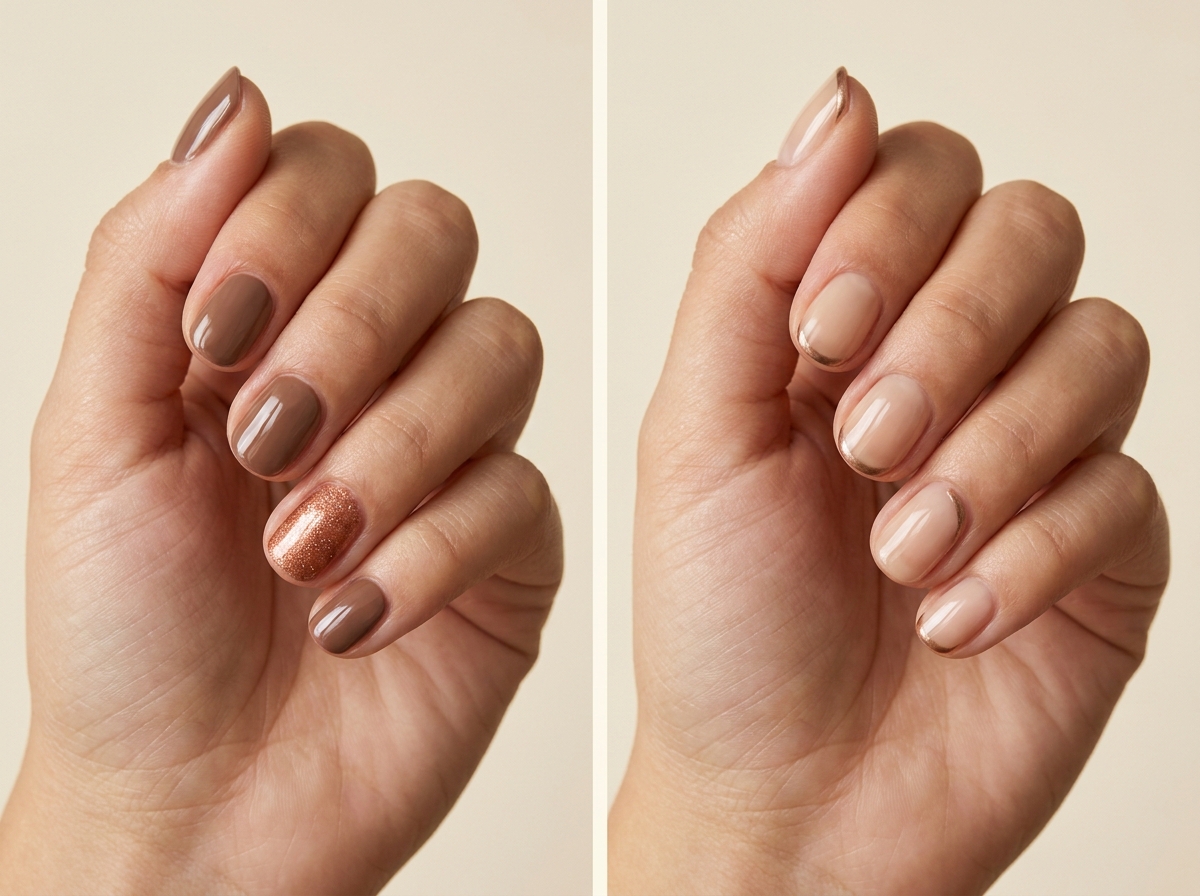
17. Copper shimmer accent
One copper shimmer nail can lift a plain mocha manicure. Choose fine particles so the surface looks luminous rather than chunky. The warm metal color connects naturally with the brown while giving a different response to light.
Try the accent on the ring finger for a familiar arrangement, or on the thumb for a less obvious choice. Keep the remaining nails uniformly glossy so the shimmer is the only major change in finish.
18. Bronze edge on sheer beige
A thin bronze edge over sheer beige gives an autumn evening look with very little pigment. Follow the tip on some nails and use a small side sweep on one accent. The warm reflected light becomes the design.
Ask to see the bronze next to your usual jewelry tone if coordination matters to you. Some bronzes lean gold and others look distinctly brown. A softer brown-gold is often the easiest bridge between neutral nails and mixed metals.
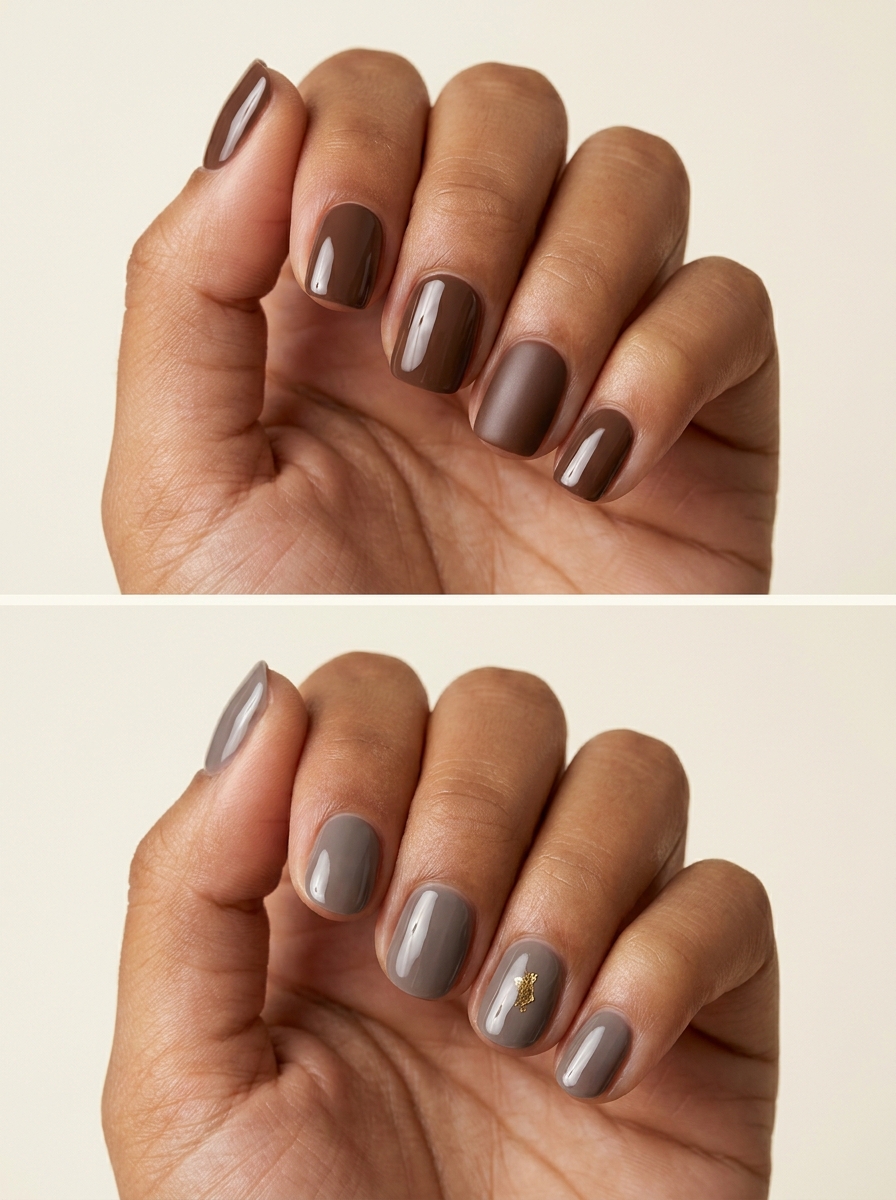
19. Chocolate with one satin accent
Use the same chocolate color across the hand, then choose a satin or matte finish for one nail. The contrast comes from surface reflection rather than a change in shade. This can feel sophisticated on a short, consistent shape.
Matte and glossy versions of a color may appear different in depth. Look at both before deciding, and remember that the appearance of a matte finish can change with wear. Keep the contrast intentional and easy to refresh professionally.
20. Smoky taupe with a tiny gold fleck
A cool taupe base gains warmth from one small gold-colored foil detail. Keep the fleck irregular and off-center, like a tiny fragment rather than a full metallic patch. Use it on one nail so the taupe remains the main impression.
This is a useful option when you like autumn neutrals but do not want orange or red. If your jewelry is silver, a pale metallic fleck can create a cooler interpretation of the same design.
Two balanced mixed manicures
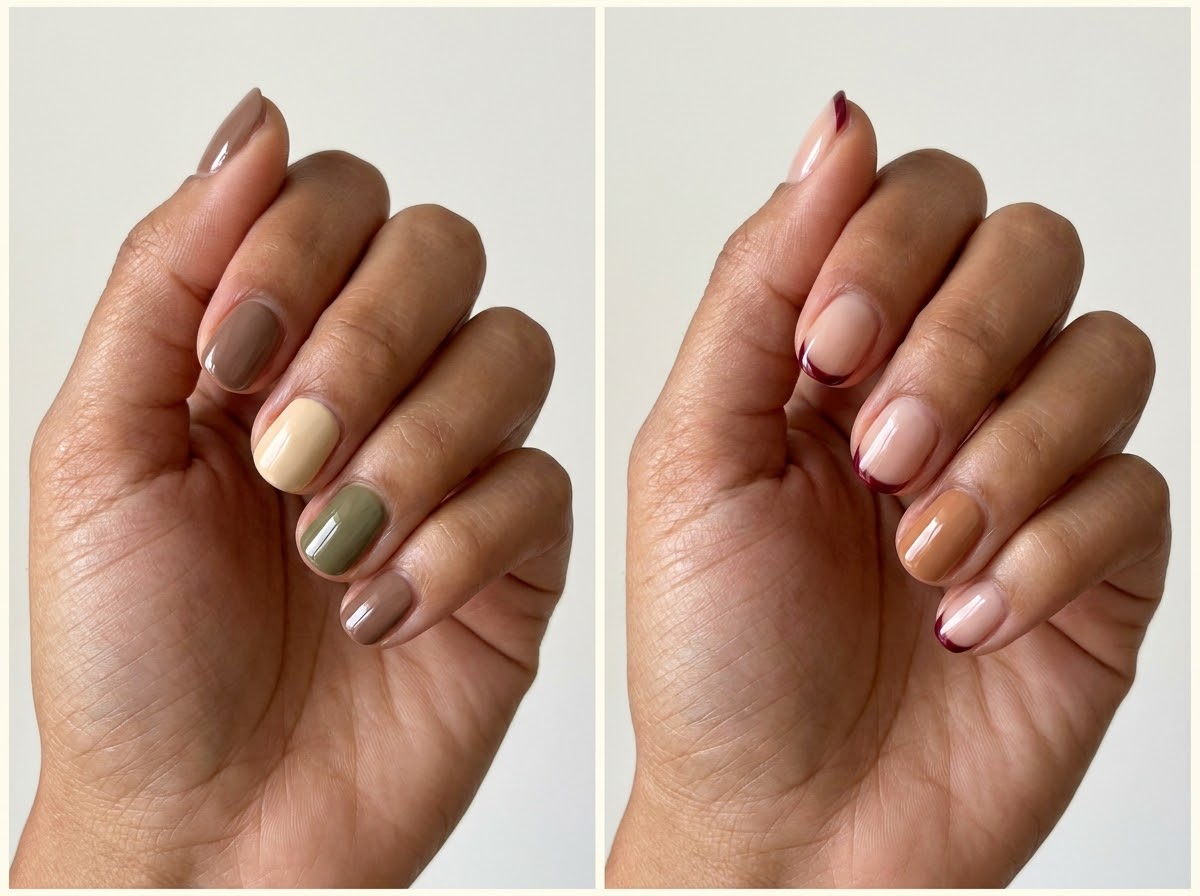
21. Mocha, cream, and olive trio
Build a three-color set with mocha as the dominant shade, one cream nail, and one olive nail. Repeating mocha across three fingers keeps the palette grounded. The cream lightens the hand while olive adds a small unexpected note.
Lay out the color order before painting. The same arrangement on both hands feels neat; moving the accent positions feels more relaxed. Either approach works as long as the three shades have similar softness and the same finish.
22. Burgundy tips with a caramel accent
Combine fine burgundy French tips on a neutral base with one plain caramel nail. The caramel supplies a warm block of color while the wine tips keep the rest open. It is a mixed set that still feels coordinated rather than random.
Choose a caramel that is softened enough to sit comfortably beside burgundy. Keep the French lines consistent, and resist adding extra autumn motifs. The contrast between a full-color accent and delicate tips already gives the manicure its identity.
Build a fall palette you will enjoy beyond one outfit
Choose a dominant shade
For a mixed set, select the color you would be comfortable wearing on every nail. Make that the dominant shade, then add one lighter neutral and one accent only if needed. This prevents a collection of attractive individual colors from turning into a manicure with no clear focus. Three shades are plenty for most short sets.
Decide whether you want warmth or depth
Caramel and terracotta give warmth; espresso and burgundy give depth. You can combine them, but a manicure does not need both to feel autumnal. If your hands look washed out beside a pale beige, a deeper accent may give useful contrast. If dark colors feel severe, a warm medium shade can provide seasonal character with a gentler effect.
Keep the overlay request precise
Tell the salon you want a short overlay and show the color placement separately. Do not assume the name of a color tells you which builder formulation will be used. Ask how the chosen product should be maintained and removed, and let the technician assess whether an infill or a different service is appropriate at your next visit.
More autumn references
For palette planning, see our fall nail color combinations. Our October nail ideas for beginners offer more restrained seasonal motifs. For another editorial gallery, browse Byrdie’s short fall nail ideas and compare which placements suit your own nail length.
Frequently asked questions
Do fall BIAB nails have to be dark?
No. Oat, cream, sage, caramel, and muted terracotta can all create an autumn palette. A small dark accent is optional. Consider the colors in your everyday clothes and choose the amount of contrast you genuinely enjoy.
Can my BIAB base stay neutral under seasonal color?
Ask your technician. The builder and decorative color can be separate parts of a compatible manicure system, but the application depends on the products used. A neutral-looking base is an aesthetic preference, not a reason to improvise product compatibility.
Which fall design is simplest to adapt to very short nails?
A solid color is the most direct option. If you want art, choose one dot, a small corner detail, or a fine tip. A full plaid or large leaf usually needs more space than those smaller marks.
How can I make the manicure work after Halloween?
Choose seasonal colors rather than holiday symbols. Mocha, olive, wine, and bronze can carry through the whole autumn wardrobe. If you want a festive detail, keep it to one small accent so the surrounding design remains useful beyond a single occasion.
The most wearable fall set usually has one clear idea: a favorite brown, a muted green, or a small wine-colored edge. Save that first, then add only the detail that makes it feel like your manicure.