20 Pastel BIAB Nail Ideas: Soft Color Overlays for Spring and Summer
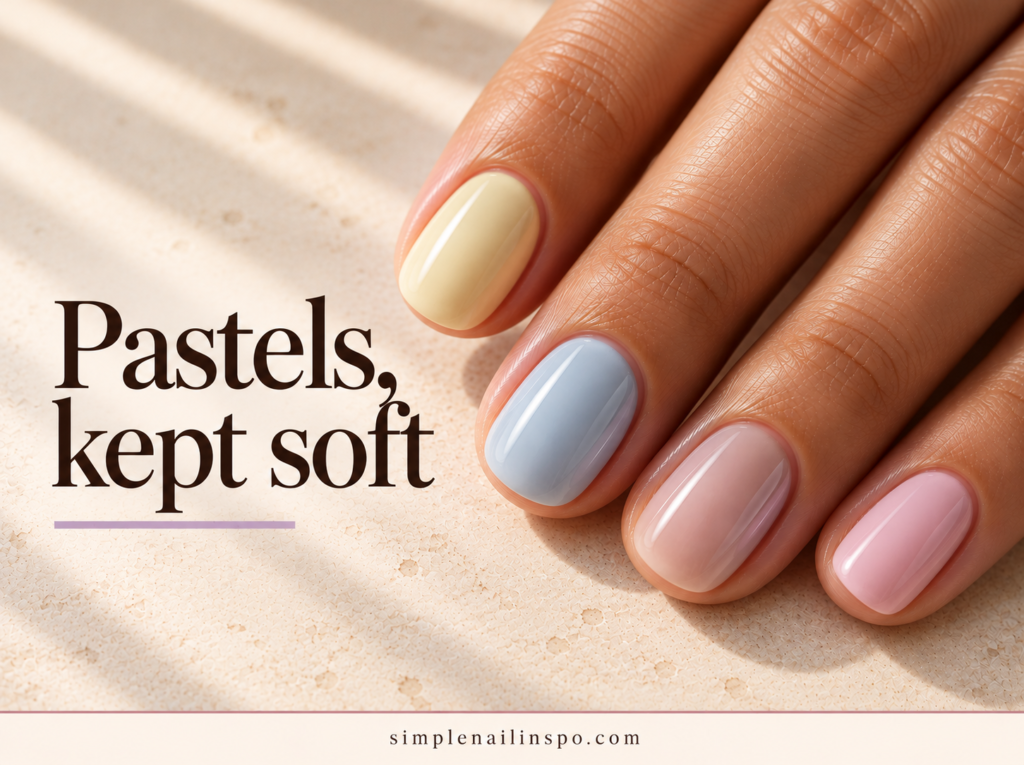
Pastel nails can be soft without looking sugary. A dusty lavender, a pale butter yellow, or a blue tip over a natural base can give a short manicure enough color to feel fresh while remaining easy to coordinate.
These 20 pastel BIAB nail ideas focus on where the color sits and how much of it you see. There are plain overlays, small color combinations, fine French tips, and a few simple accents. Some feel crisp and opaque; others keep a little of the natural nail visible.
BIAB™ is The GelBottle’s Builder In A Bottle™ range. A pastel appearance may come from a colored builder or a compatible decorative color over it. Confirm the product with your technician rather than assuming every pastel manicure uses the same formula.
Choose your version
Pick your level of softness before choosing the hue. A white-rich opaque pastel looks creamy and graphic. A muted pastel with gray in it looks quieter. A translucent pastel feels lighter because the natural nail influences the final color.
Then choose one color, two related colors, or a deliberate rainbow. A single pastel is the simplest to coordinate. Two colors can provide a little variety without a busy set. If you choose five shades, match their depth and finish so they look like one palette.
| Your priority | Looks to consider | Detail to specify |
|---|---|---|
| One soft color everywhere | 1–4 | Warm or cool undertone |
| Something a little less expected | 5–8 | Muted pigment and balanced coverage |
| Two colors together | 9–12 | Similar softness |
| Color only at the edge | 13–16 | Narrow tips and a plain base |
| A small playful detail | 17–20 | One repeated color family |
Fresh single-color pastels
1. Butter-yellow short rounds
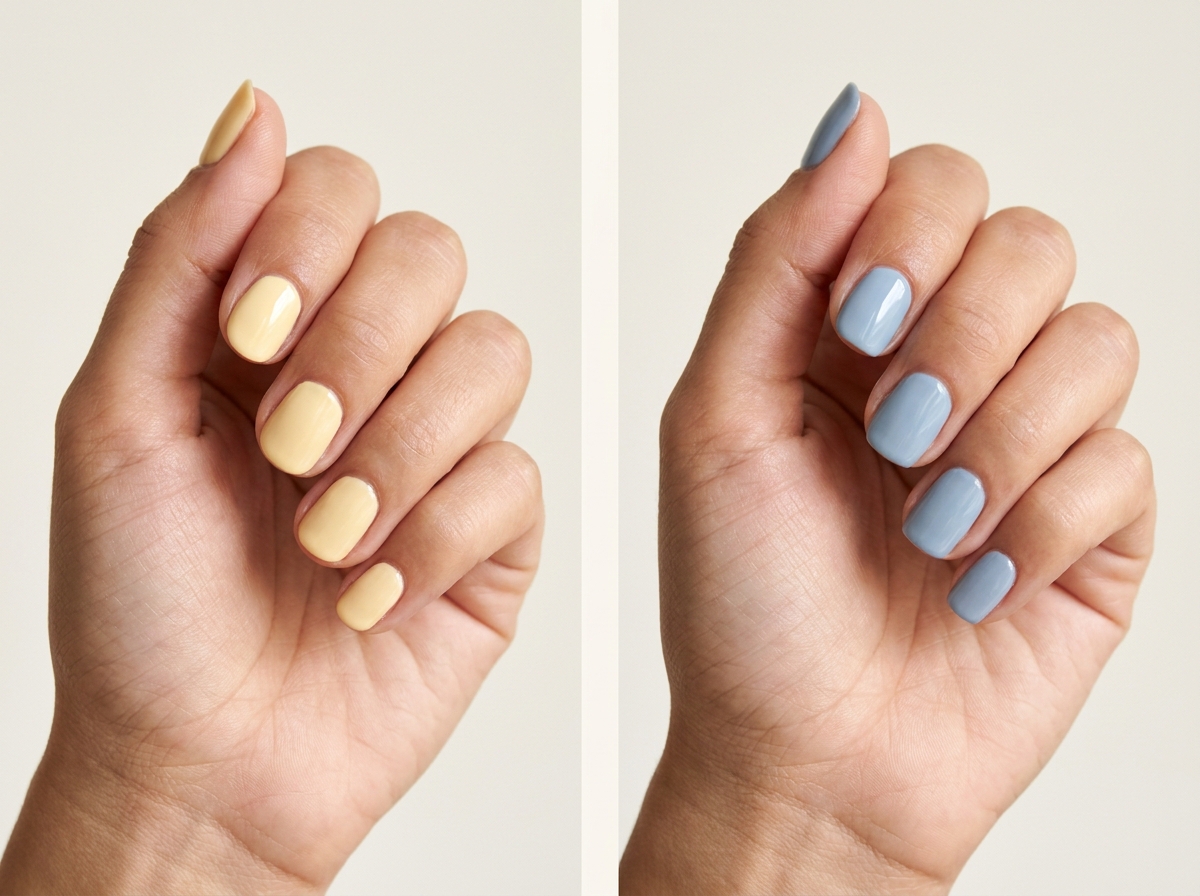
A pale butter yellow feels warm and sunny on short rounded nails. Choose a creamy shade with enough softness to avoid looking neon. Plain gloss gives the color a fresh finish without requiring flowers or other spring motifs.
Compare the yellow with a neutral cream before deciding. If you want a very subtle result, choose the shade closer to cream; if you want the color to register clearly, move a little further toward yellow.
2. Powder-blue squovals
Powder blue gives a short squoval manicure a clean, cool appearance. Keep the corners soft and the color even, allowing the outline to frame the pastel. A glossy finish helps the blue look polished rather than chalky.
If a very pale blue feels stark, try one with a little gray. The muted version still belongs to the pastel family but may be easier to wear with denim and everyday neutral clothing.
3. Soft lilac ovals
Lilac looks delicate on a short oval shape, especially when it has a balanced mix of pink and blue. Keep the nails plain so the color can be the whole idea. The rounded outline reinforces the softness of the shade.
Ask to compare lilac with lavender rather than relying on the names. Some salon shades described as lilac are rosy, while others are distinctly cool purple. Choose the version that gives the effect you want.
4. Pale peach gloss
A soft peach pastel offers a warm alternative to pink. It can look cheerful without becoming bright coral, especially on a compact rounded shape. The best version for this look has enough creaminess to show the color but no strong orange cast.
Keep any accent in the same warm family if you add one later. A cream dot or lighter peach tip will feel more connected than introducing a cool white or blue detail immediately.

Muted pastels with character
5. Muted mint nails
Mint can feel quiet when the green is softened with gray rather than pushed toward turquoise. Use it across all nails in a short, tidy shape. The cool color gives a fresh change from beige while remaining restrained.
Check the sample beside both white and cream fabric if those are common in your wardrobe. The surrounding color can make mint appear bluer or greener, helping you decide which undertone you prefer.
6. Dusty pink pastel
A dusty pink with a little muted depth feels less candy-like than baby pink. It is a useful choice when you want spring color that still reads as understated. A short square or squoval outline gives it a neat frame.
Choose a shade with enough pink to look intentional against your hand. If it is too close to your usual nude, the change may feel invisible; a slightly stronger dusty rose can keep the softness while adding character.

7. Pistachio cream
Pistachio sits between pale green and yellow, creating a warmer green manicure than mint. Keep it creamy and gently muted. It looks especially appealing as a plain short set because the unusual undertone does not need extra decoration.
If the sample seems too yellow, compare it with a more neutral sage. The two can look similar in a bottle but produce different moods once placed over the whole nail.
8. Periwinkle pastel
Periwinkle mixes blue and purple into a color that can feel both cool and playful. Wear it on short ovals for a gentle shape, or on squovals for a more graphic appearance. A plain glossy finish makes the hue easy to appreciate.
Avoid adding a second purple until you have seen the color by itself. Periwinkle already shifts in character depending on surrounding colors, so it can provide enough interest without a mixed palette.

Two-color combinations
9. Lilac with one butter-yellow nail
Use lilac as the main color and a pale butter yellow on one accent nail. The two pastels have different temperatures but similar softness, creating a cheerful contrast. Keep their opacity and shine consistent.
Place the yellow on the thumbnail if you want a less conventional accent. One contrasting nail is enough to introduce the pairing; repeating alternating yellow and lilac across every finger creates a much more playful result.
10. Mint and peach pair
A muted mint and a soft peach create a balanced cool-warm combination. Use one color on three nails and the other on two, with a planned order. Rounded short nails keep the two-color set relaxed.
Both shades should be similarly pale. A bright peach beside a very faint mint will dominate the hand. Compare them together before painting so the relationship feels equal and the colors belong to the same manicure.

11. Blue with a cream accent
Powder blue across most nails and one cream accent gives a softer alternative to blue and bright white. The cream provides a resting point while keeping the palette light. Short squovals make the contrast look tidy.
Choose a cream that does not appear strongly yellow beside the blue unless that contrast is intentional. A neutral cream often works best when you want the accent to feel gentle rather than noticeably warm.
12. Tonal pink pairing
Combine a pale blush with a slightly deeper dusty pink. The small change in depth gives the manicure variety without a strong color clash. Alternate the shades or use the deeper pink on one accent finger.
This is an easy first mixed pastel set because the colors share a family. Keep the lighter shade from becoming almost white if you want a truly tonal effect rather than a high-contrast pink-and-white manicure.

Pastel French and edge details
13. Pastel-blue micro French
A fine blue edge over a translucent neutral base gives pastel color a lighter footprint. Keep the tip narrow and let it follow the natural curve. It is a useful option when full blue nails feel like too much.
Choose a blue with enough pigment to remain visible in a thin line. Very pale shades can disappear against a sheer base, so the right tip color may be slightly stronger than the full-color blue you would otherwise choose.
14. Lavender side tips
Place lavender along one corner of each nail, sweeping gently toward the free edge. The diagonal placement creates movement while leaving most of the base open. A soft pink base makes the lavender feel delicate.
Keep the colored wedge small on the pinky and broader only where the thumbnail has space. Similar visual weight across the fingers matters more than using an identical shape on every nail.

15. Butter-yellow French over rose
A warm pale yellow tip over a sheer rose base feels fresh and slightly unexpected. The pink should remain translucent so the yellow edge is easy to read. Use a shallow curve for short nails.
This pairing works best when the yellow is creamy rather than neon. Ask to see the two colors together, since a cool pink base can make some yellows appear stronger than they looked in the bottle.
16. Alternating mint and lilac tips
Keep one neutral base across the hand and alternate mint and lilac at the tips. The repeating French shape ties the two colors together. It gives the variety of a mixed manicure with more visible natural-looking space.
Use the same narrow tip width for both shades. If one color needs more visual strength, choose a slightly clearer version rather than making its tips much thicker than the others.

Small accents and coordinated sets
17. Tiny white daisy on peach
One white daisy on a peach accent nail creates a simple spring detail. Keep the remaining nails plain peach and use a small muted yellow center. The flower should sit to one side so it does not fill the entire nail.
For a very short set, place the daisy on the thumb. The wider canvas allows a readable flower while preserving the small scale that makes the design feel delicate.
18. Lilac with one silver dot
A single silver-colored dot on one lilac nail adds a small reflective detail. Keep the dot flat-looking and modest in size, allowing the pastel to remain dominant. This gives a dressier interpretation without turning the manicure into a chrome set.
Place it off-center near the lower third. If you wear silver rings, the tiny accent can echo them without needing matching metallic details on every finger.

19. Five balanced pastels
Choose five colors with similar lightness: butter, peach, dusty pink, lilac, and powder blue. Give each finger one color and repeat the sequence on the other hand. A consistent short shape makes the rainbow feel organized.
Avoid including one neon or one dark shade unless you want a deliberate break in the palette. The appeal of this version comes from the colors feeling like a coordinated collection rather than unrelated favorites.
20. Pastel dots on a sheer base
Use a neutral translucent base with one tiny pastel dot on each nail. Change the dot color across the hand while keeping its placement consistent. This gives the idea of a pastel rainbow with very little actual coverage.
Choose colors that remain visible at a small scale. If the pale yellow disappears, a warmer butter shade may work better. The dots should look intentional when viewed together, even if each one is quiet on its own.

Choose pastel color without losing the soft effect
Separate color from opacity
Pastel describes a light color family, not a single finish. A fully covering blue can look crisp and graphic; a translucent blue looks airy. Show your technician whether you want the natural free edge visible. This one decision often explains why two manicures using similar colors look very different.
Ask how the color will be created
The GelBottle offers a pastel BIAB collection, but your chosen salon may use a different combination of builder and decorative color. Ask which product is providing the pastel and which service is appropriate for your nails. Do not assume the same application or removal instructions apply to every builder formulation.
Use a simple palette test
Line up your proposed colors together and look for the one that stands out most. If one shade is much brighter, grayer, or more opaque than the others, decide whether that contrast is intentional. For a gentle mixed set, replace the outlier with a softer version. For a playful set, keep it and make it the single accent.
More references for light colors
For edge proportions, see our short French tip ideas. If you also paint regular polish at home, our pale nail polish guide covers that separate application context. Do not transfer regular-polish advice automatically to a professional builder or gel system.
Frequently asked questions
Are pastel BIAB nails always opaque?
No. The visible result depends on the chosen product and decorative color. Ask specifically for creamy coverage or a translucent effect. A pastel shade name alone does not tell you how much natural nail will show.
Can I have different pastel colors on every nail?
Yes, as a design choice. Match their lightness and finish for a coordinated result, and plan the order before painting. A repeated sequence across both hands feels tidy; different sequences create a more relaxed effect.
Which pastel works best on short nails?
Any can work when the coverage and placement suit your taste. A full-color pastel makes a clear statement, while a narrow tip or tiny dot uses less color. Choose the shade you enjoy rather than assuming short nails need one particular hue.
How do I keep the set from looking too sweet?
Try muted colors, a consistent short squoval shape, and plain gloss. Dusty pink, gray-blue, and softened mint usually feel quieter than very bright candy pastels. Reduce flowers and other motifs if you want the color itself to carry the design.
Start with the pastel you would happily wear alone. Then decide whether a second color, a fine tip, or one tiny accent adds something you actually want. Soft color can be the complete manicure.