20 BIAB French Nail Ideas for Short and Natural Nails
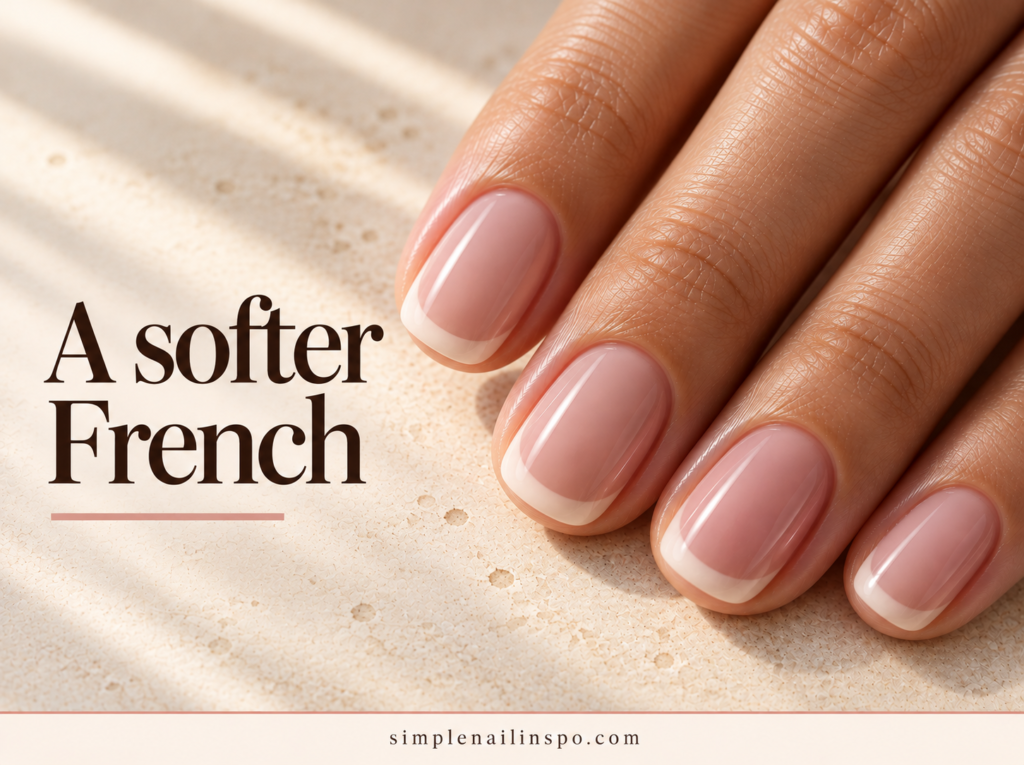
A French manicure on short nails succeeds or fails on proportion. A narrow tip leaves the nail bed looking open; a thick band can take over the same nail. With a BIAB overlay underneath, you can choose anything from a barely visible ivory edge to a wine-red curve while keeping the shape compact.
These 20 BIAB French nail ideas explore the tip itself: its width, direction, color, and relationship to the base. Some are almost invisible from a distance. Others use a small amount of dark or metallic color for a sharper result. You do not need long extensions to make them work.
BIAB™ is The GelBottle’s Builder In A Bottle™ range. French describes the painted design, rather than the builder product beneath it. Confirm the actual system with your technician; the appearance of a manicure cannot establish its brand.
Choose your version
Start by looking at the shortest nail, not the longest. Its available space should set the scale of the French across the whole hand. If that nail barely extends beyond the fingertip, choose a fine painted edge, a side detail, or a softened fade instead of a deep white smile.
Next compare your base and tip together. Pink under white looks more contrasted than beige under ivory. A translucent base also reveals the natural free edge; if that line is uneven, discuss slightly more coverage underneath. You are choosing an optical effect as much as a color.
| Your priority | Looks to consider | Detail to specify |
|---|---|---|
| A barely visible manicure | 1–4 | Soft white and narrow coverage |
| Color without a full manicure | 5–8 | One muted tip color |
| A graphic edge | 9–12 | Direction and symmetry |
| A softer boundary | 13–16 | Blend or reflected light |
| A small occasion detail | 17–20 | One accent and restrained scale |
Soft white French tips
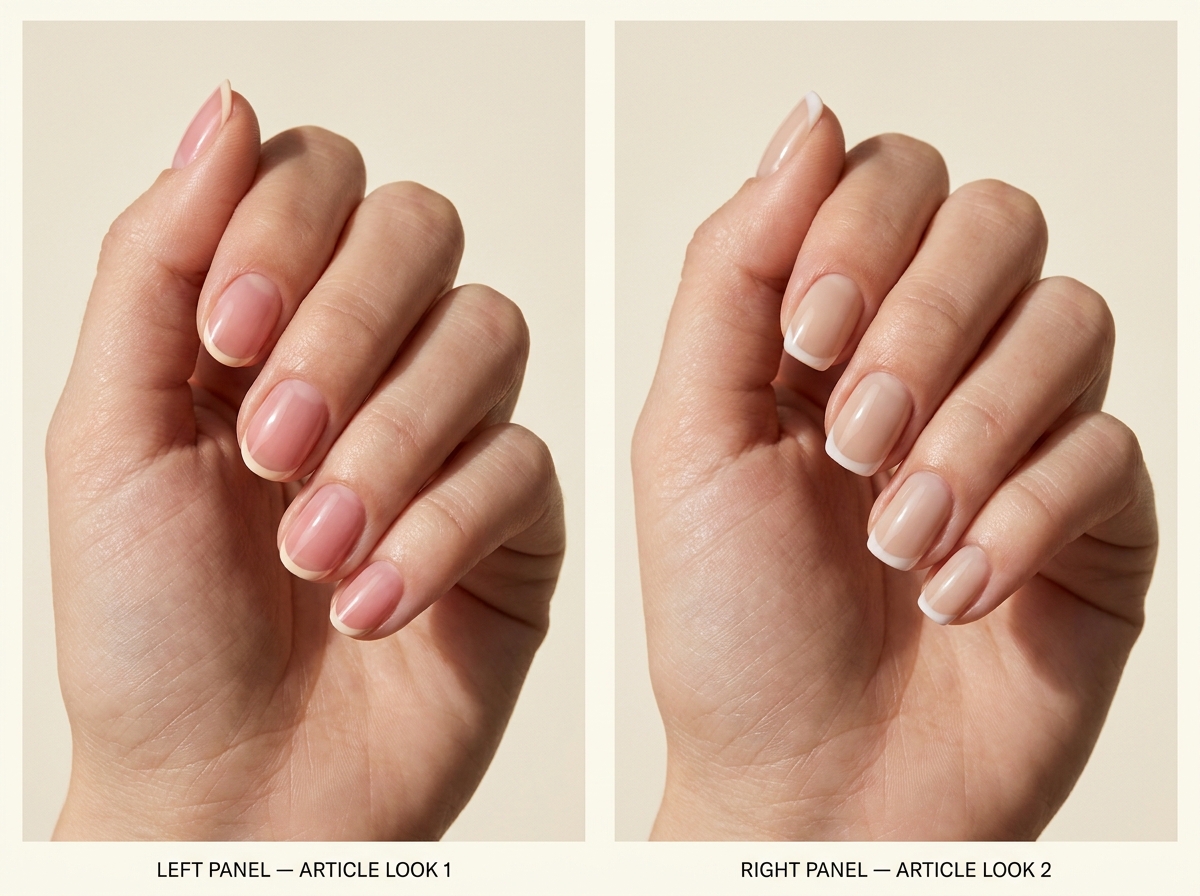
1. Ivory micro French on rosy rounds
A fine ivory arc over a rosy sheer base is the gentlest starting point. Keep the white narrow at the center and let it follow the curve of the nail instead of making a straight stripe across it. The warmer ivory makes the boundary less abrupt than bright white.
This works particularly well when you like your natural nail bed showing. Request a balanced edge across all fingers, with the pinky receiving a smaller version of the same curve.
2. Soft white French on beige squovals
Choose a neutral beige base and a soft white tip on a short squoval shape for a slightly more tailored look. The corners should stay rounded even when the free edge appears fairly straight. That combination gives the manicure structure without making the nail look boxy.
If the beige reads gray against your skin, compare a warmer sample before committing. The goal is a base that makes the white look deliberate, not a perfectly matched skin-tone swatch.
3. Barely tinted base with cream edges
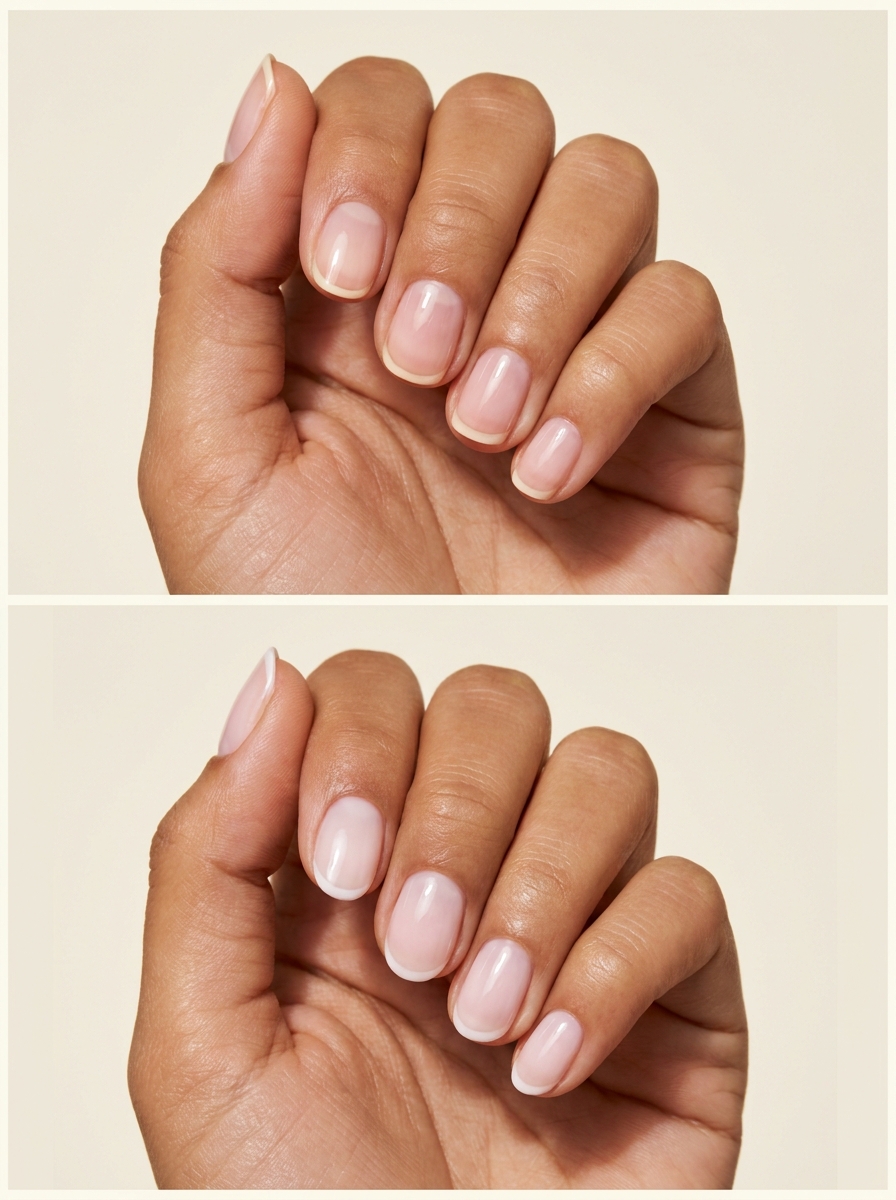
Let the base remain almost transparent and use cream only where the nail ends. This version resembles an edited natural manicure: clear enough to see the nail, but with more consistency in the free edge. It suits small nail beds because little space is covered by contrasting color.
The natural tip may still show beneath the paint. Decide whether that variation appeals to you; a slightly more covering base is the better choice if you want identical-looking tips.
4. Double-soft pink and white
A cloudy pink base paired with a softly opaque white tip gives a cushioned, romantic result. Both colors should feel gentle, with neither a clear glass base nor a brilliant white stripe. Short oval nails make the transition especially soft.
Ask for the pink to stop short of looking like solid candy polish. This design is useful when you want more visual coverage than a sheer French, but still want to recognize the separation between base and tip.
Colored tips with a quiet base
5. Chocolate thread tips
An espresso or chocolate line adds definition without covering the entire nail in brown. Put it over a warm translucent base and keep it fine enough that the base remains the first thing you see. The contrast is especially effective on short rounds.
For an understated autumn manicure, choose chocolate with a little warmth rather than a nearly black shade. If you wear mostly cool gray clothing, a cooler cocoa edge can connect better with your usual palette.
6. Muted rose French
Replace white with a dusty rose tip that sits only a few shades deeper than the base. This creates a tonal French: the distinction is visible up close but quiet at arm’s length. A curved tip reinforces the softness of the pink.
Keep the base neutral enough that the rose edge does not disappear entirely. Ask to see the two shades beside each other on a sample; colors that look distinct in bottles can become very similar once applied thinly.

7. Olive micro tips
A muted olive edge over a peach-beige base offers a small, wearable dose of green. The warm base prevents the olive from feeling too cool, while the narrow placement keeps the color from dominating the manicure. Try it on short squovals with softly rounded corners.
Choose an olive that reads green in ordinary daylight, not only under a salon lamp. If you want a cleaner spring interpretation, switch the base to neutral pink and keep the same tip placement.
8. Burgundy curved tips
Burgundy looks rich when concentrated into a neat arc. Leave most of the nail softly nude, then use a red-wine edge with a gently raised curve at the sides. This gives the nail a little visual length without requiring a long free edge.
A very deep burgundy may look almost black in shade. Select a slightly brighter wine if the red undertone matters to you, and avoid adding glitter until you have seen how much contrast the tips already provide.

Change the shape of the smile
9. Diagonal ivory tips
Move the French boundary diagonally across the corner of the nail instead of following a centered smile. One side receives a little more ivory and the opposite side stays nearly bare. The result is asymmetric but still recognizably French.
Choose the same direction across a hand for a tidy rhythm, or mirror the direction between hands. On the shortest nail, reduce the colored wedge so it remains a corner detail rather than becoming a half-painted nail.
10. Fine V-shaped tips
Two slim diagonal strokes meeting near the center create a pointed French effect on a rounded or squoval nail. The painted V supplies the angle, so the actual nail does not need to be filed into a point. Use ivory first if you are unsure about the shape.
Keep the meeting point shallow. A deep V that reaches halfway down a short nail can feel crowded. This option is best when you want a graphic detail without adding extra motifs or embellishments.

11. One-sided white sweep
A narrow white sweep runs from one side toward the free edge, leaving the opposite corner quiet. It feels less formal than a complete French and can be easier to fit visually onto nails with very little free edge. The base stays transparent pink.
Choose a slender tapered finish rather than a broad swoosh. One wider accent nail can provide interest, but repeating the same scale on every finger makes this version feel more intentional and less like unfinished tips.
12. Split cream and taupe tips
Divide the tip into two restrained colors: cream on one side and taupe on the other. Let them meet at a slight angle near the center. Because both colors are neutral, the split reads as a design detail rather than a bright color-block manicure.
This is most successful on short nails when the band stays fine and the base stays plain. Skip a separating metallic line initially; the change between cream and taupe already supplies the point of interest.

Blended and luminous finishes
13. Soft white baby-boomer fade
Blend a pale white tip into a pink base so there is no crisp smile line. The white should be strongest at the edge and gradually lose definition toward the middle. This gives the impression of a French manicure through a soft-focus filter.
On a short nail, keep the brightest portion close to the tip. If the white extends too far down, the manicure can become an all-over milky look. Specify that you still want pink visible through the lower half.
14. Peach base with a blurred cream tip
A peach-tinted base warms up a faded French without making it orange. The cream edge should feel softly melted into the peach, especially on short rounded nails. It is a useful variation if cool pink tends to look too pale against your hands.
Ask for the fade to be subtle rather than a dramatic two-color ombré. The beauty here is the near-neutral transition. Leave off nail art so the delicate difference between the two warm shades remains easy to see.
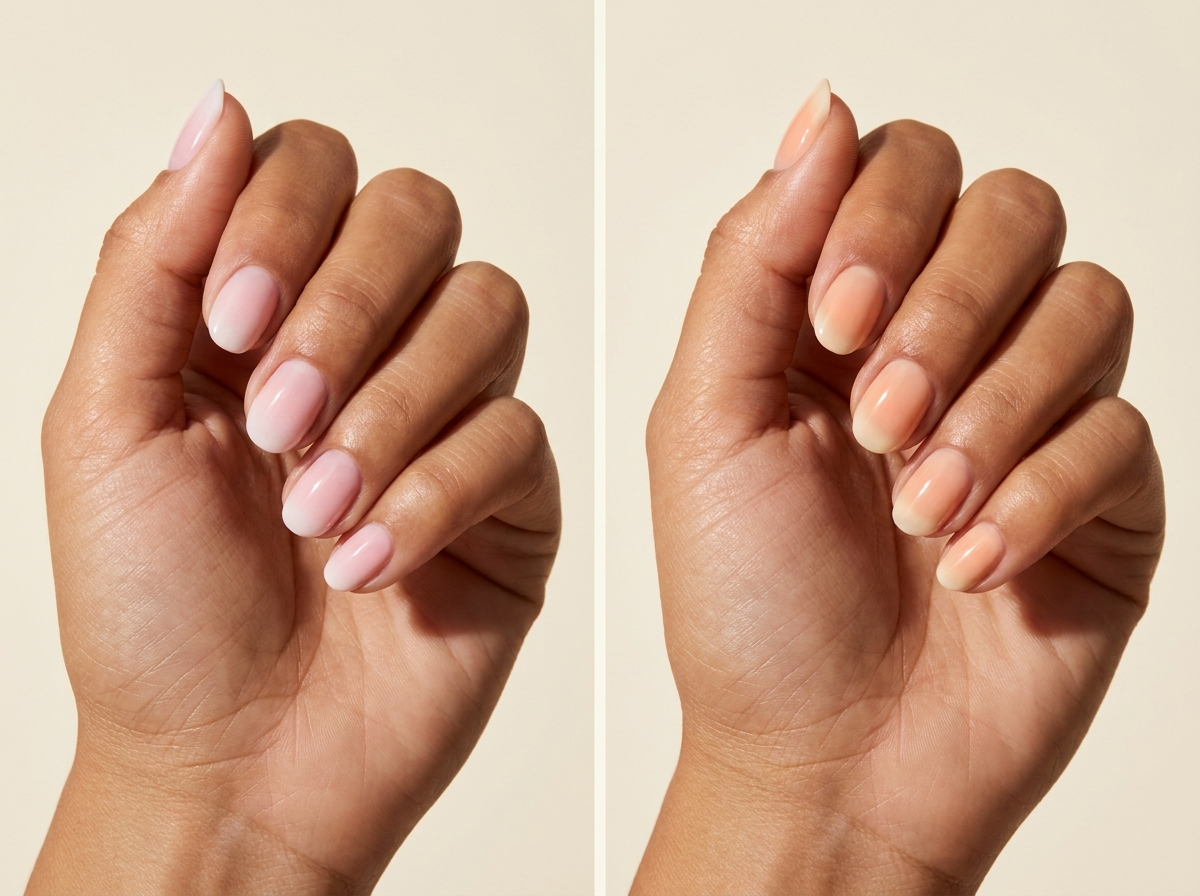
15. Pearly French edges
Concentrate a pearly sheen in the tips while leaving the base softly pink. The edge becomes visible when the hand moves, giving a French effect with less obvious color contrast. A smooth, glossy finish helps preserve that reflected-light quality.
Show your technician whether you prefer white pearl or a pink-shifting pearl. Those finishes can look quite different against the same base. Keep any chrome or pearl product within the chosen design so the whole nail does not accidentally become glazed.
16. Champagne shimmer tips
Use a fine champagne shimmer for the free edge, with a translucent beige base beneath it. Small particles keep the design closer to a luminous French than a chunky glitter manicure. It is an easy visual bridge between everyday neutrals and an evening outfit.
A softly scattered boundary can look more forgiving than a sharply painted shimmer band. If you prefer a precise French, ask for the shimmer to stay contained within a clear curve and keep the remaining nail completely plain.

Small details around a French tip
17. French with one tiny side heart
Start with ivory micro tips, then place a single small heart beside the tip on one ring finger. Position it slightly off-center so it feels connected to the French curve rather than floating in the middle of the nail. A dusty pink heart keeps the palette soft.
The heart should remain smaller than the surrounding exposed base. On very short nails, move it to the thumbnail, where the artist has more width for a recognizable shape without enlarging the entire design.
18. French with a dotted accent edge
Add three tiny dots just beneath the tip on one accent nail. Use the same white as the French so the extra detail belongs to the existing design. Leave a visible gap between each dot, and keep the other nails clean.
This gives a playful variation without needing a full pattern. A short square or squoval accent nail offers a useful horizontal space for the dots. Avoid carrying the dotted row all the way around the sides, where it can become visually busy.

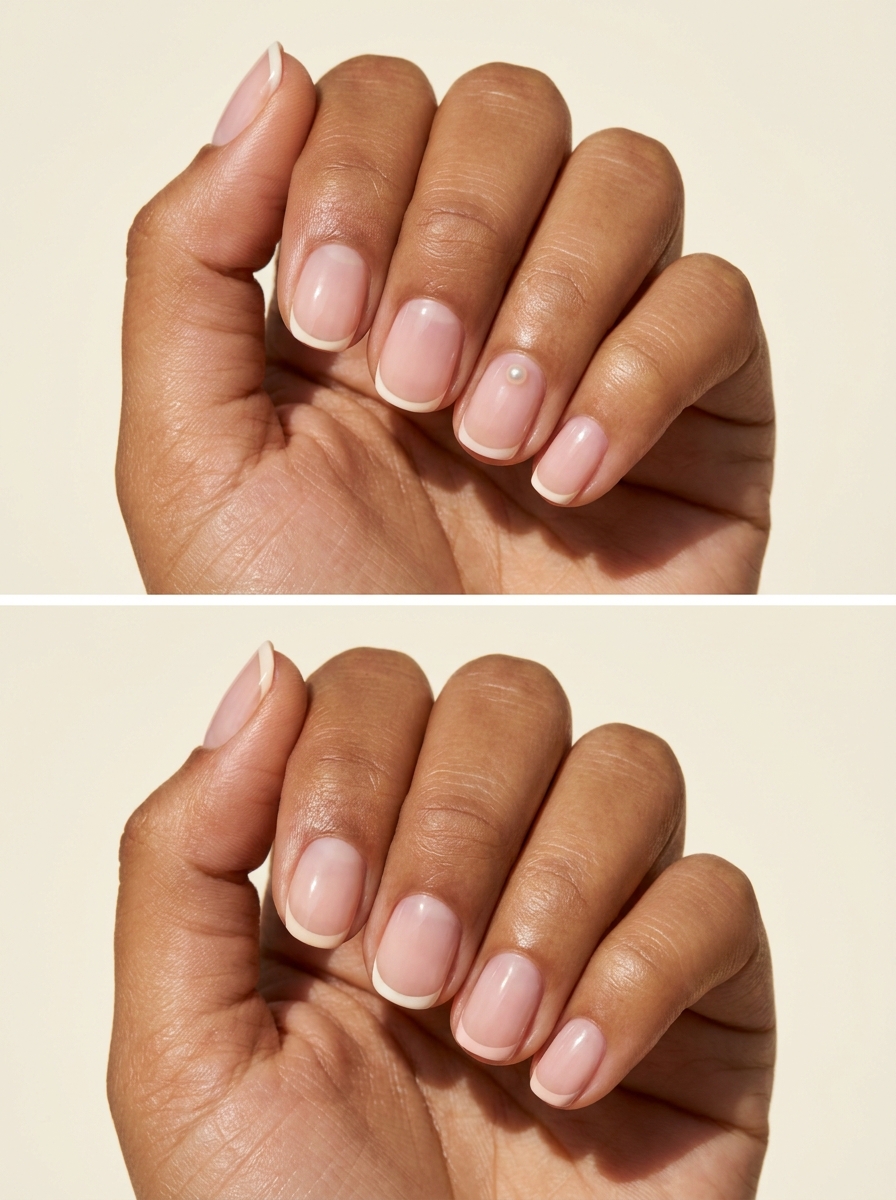
19. French with a miniature pearl accent
A single small pearl-like embellishment near the base of one nail adds a dressier finish to a simple French. The tip itself can stay extremely fine. Choose an accent with a low profile and leave enough space around it for the pink base to remain visible.
Discuss placement with your technician, especially if you wear gloves or handle textured fabrics often. You can also ask for a flat painted pearl effect if you love the appearance but do not want a raised decoration.
20. Alternating cream and blush tips
Keep the same translucent base on every nail, then alternate cream and pale blush at the edges. The two tip colors should have similar softness so neither interrupts the rhythm. It is a gentle way to make a coordinated set feel less uniform.
Use a planned order rather than choosing colors randomly during the appointment. For example, cream can sit on the thumb, middle, and pinky, with blush on the remaining two nails. Matching tip width ties the alternating colors together.
Plan a French manicure that fits your nails
Bring two decisions to the appointment
Choose the base coverage and the tip shape before discussing extras. A photo of a sheer French may look different on you because your natural free edge shows through. Tell the technician whether you want to see that line or prefer it softly concealed. Then point to the narrowest part of your reference tip so the width is not interpreted too generously.
Use the shortest nail as the scale reference
A set looks balanced when the French has similar visual weight across the fingers, even if every painted line is not exactly the same measurement. Broad thumbnails may need a slightly wider arc; pinkies often need less. If one nail has broken, a side French can create a deliberate variation while you keep the overall length comfortable.
Keep color and structure separate
The builder layer and the visible French design serve different purposes. Let your technician choose the suitable structure and product application, then decide the decoration together. The GelBottle’s French manicure guide offers brand-specific technique context; the design choices here focus on proportion and appearance.
Choose your next variation
If tip width is your main concern, browse our short French tip nail ideas for more shape references. For a seasonal version, take a muted edge color from these October nail ideas for beginners and keep the same base. Changing only one element makes it easier to understand what you liked about your previous manicure.
Frequently asked questions
Can BIAB French nails stay very short?
Yes, the design can be adapted to short natural nails. A fine painted edge, side sweep, or soft fade usually leaves more visible nail bed than a deep French. Your technician should assess the structure separately; a painted tip does not require adding length.
Does a French design need a white tip?
No. French describes the contrast or detail at the free edge. Cream, rose, chocolate, olive, and metallic finishes can all create that effect. A color close to your base feels subtler; a dark tip makes the line more graphic.
Which base hides an uneven natural tip?
A base with more visual coverage can soften the appearance of an uneven free edge, but the exact result depends on your nails and the product. Ask for a swatch or one completed sample nail rather than choosing by a bottle photograph alone.
Is BIAB the same as a French manicure?
No. BIAB identifies a branded builder product range; French identifies the decorative look. Similar-looking French designs can be made over different manicure systems. Confirm the product and appropriate maintenance with the salon instead of relying on the design name.
For your first short BIAB French, save one base-and-tip combination that you would happily wear without extras. Once that proportion feels right, a different edge color or one tiny accent is enough to make the next appointment feel new.